Let’s Race Bikes! Join the Mosaic Factory Off Road Team.

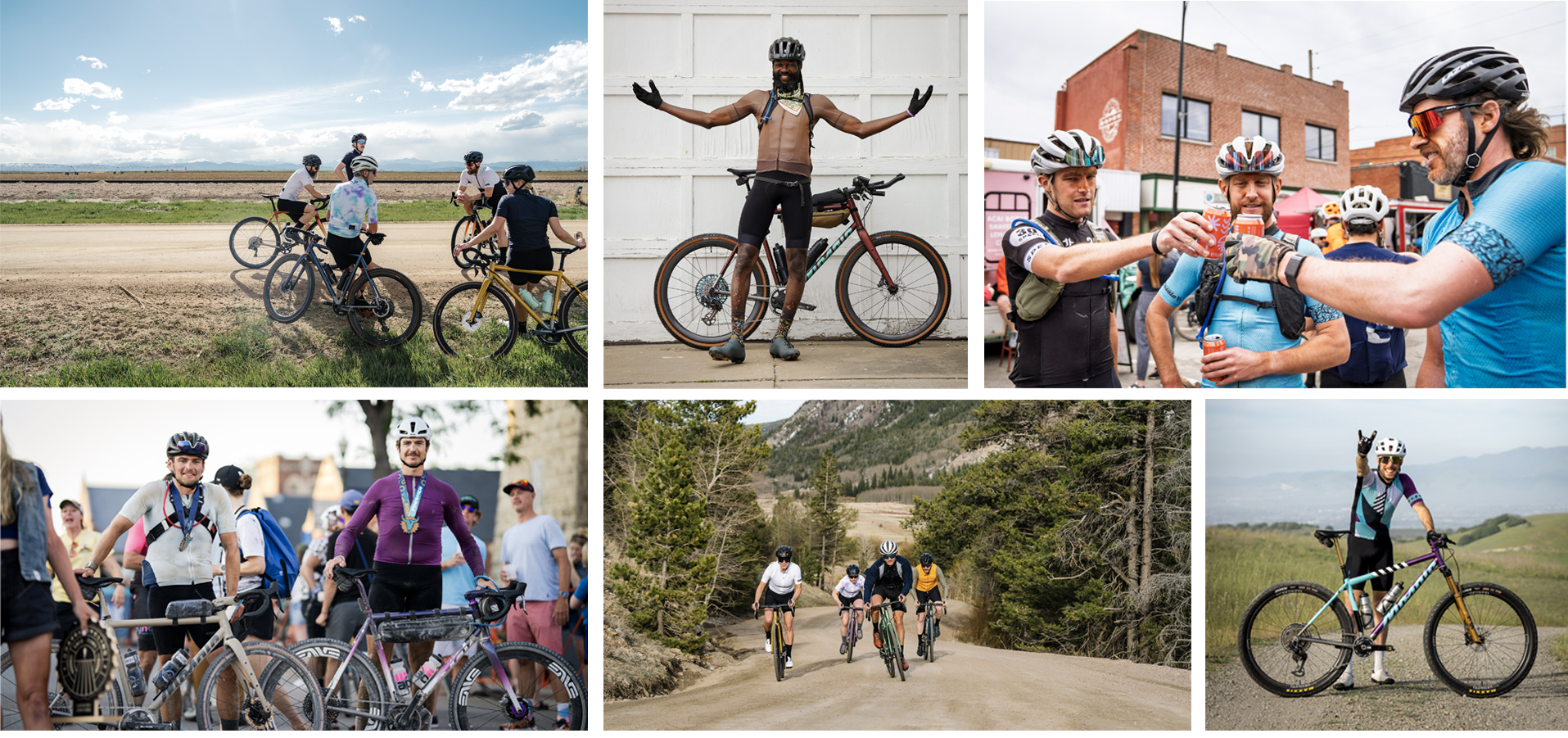
Racing is a big part of the Mosaic story. Our bikes have seen National Championships wins, World Cup CX races, and our staff pins a number on for  big events including Unbound Gravel, Mid South, Leadville and too many others to list. And for 2026, we’re inviting you to join us on the start line as part of the 2026 Mosaic Factory Off Road Team.

The plan: go hard before, during and after the race, and have a hell of a good time in the process while representing Mosaic bikes and team gear—we’ll help with that part. 

You don’t have to be a pro rider to join us, but you do have to be quick as spots are limited. More details below.

Mosaic Factory Off Road Team Application

Lost Bikes, UCI stickers and the Iconic Tabor World Cup CX

We caught up with Mosaic’s World Cup CX Racer Ben Frederick, whose busy 2025 season brought him to Boulder recently for some rides and racing. And then a whole lot of big stuff happened all at once.

Last we heard you were racing the Boulder CX Cup in our own back yard. And then suddenly you’re on the start line in one of the most iconic CX World Cups of all…Tabor in the Czech Republic. Was this the plan all along? How did that happen?

Ben: In short, this was not the plan! I landed in Boulder Colorado (after racing the Pan American CX Champs the weekend before) to an email saying I had made the World Cup team for Tabor, in the Czech Republic. My name was presented to the selection committee and I qualified. Now, one can’t just line up for a World Cup because they want to…so being selected is itself an honor, even though it wasn’t something I had in the cards. My top 125 World Ranking helped me get my spot on the start line. I went back and forth ad nauseam on whether to throw it on my credit card and deal with it later, or skip it and stay home. Ultimately I would have regretted not taking the opportunity. I was encouraged by friends and family to just send it, and I’m so glad I did. 
And then there’s your day job at Ornot. Anything big happening there at the moment and how do you juggle that with everything else?

Ben: This time of year is the Super Bowl for Ornot, with Pre-Black Friday and multiple product launches along with Black Friday itself. It’s  all hands on deck, and as the Customer Service guy, there’s a LOT going on for me. This was a big consideration in my debate whether to go…ornot…because we’re a small team and having someone spontaneously operate on a nine hour time difference puts strain on the team. Ultimately I got Ornot’s full support to do the thing which took a big weight off the decision to go. 

So a lot of scrambling and logistics had to happen in short order. Run us through the short list. 

Ben: Oh yes. Here’s the list.

1. Buy an international plane ticket that wasn’t outrageously expensive, with a decent itinerary that got me to Prague in enough time to get settled and get over some of the jet lag.

2. Secure housing and transportation. Luckily I was completely taken care of by my friends at Broom Wagon Works, who basically took care of me from the moment I landed to when we left for the airport. We’ve travelled a lot together domestically and also for the Dublin World Cup last year. It was like getting the band back together

3. Race both days against a stacked field at the Boulder CX Cup. Finish 11th on the first day and 9th on the second. Pack everything and head home to San Francisco the next morning.

4. Spend 17 hours at home in SF to unpack and re-pack everything. I went from racing in 60 degree weather to a forecasted high for the week of 32 degrees in the Czech Republic, so a wardrobe switch was in order. I also had been away for a week and a half for the Pan Ams/Boulder Block and also needed a quick bit of FaceTime at home with my fiancé and kittens.

5. Make sure my bikes are UCI legal…

The UCI sticker? That was an issue last season too wasn’t it? What did you have to do to make it happen?

Ben: How to make this…short? To race at the World Cup level, the UCI requires a sticker which signifies that your bike has been deemed safe and compliant with the current rules. This is mostly pointed at carbon fiber frames for safety and to keep designs more or less conventional,  but as we know, the Mosaic titanium frames I ride are in a lot of ways the same way bikes have been made for over 100 years. So we needed to send the UCI proof that the bikes were within all their regulations before I was able to race. 

It’s not a straightforward process. We started this in September of 2024, well over a year ago. We had trouble moving things forward so my trip last winter had me pulled from one of the races because there wasn’t a sticker, even though we had paperwork and had started the process. Luckily we were able to work it out to finish that trip, but this year, we still were struggling to make progress. Even before the Czech trip was a consideration, I had been emailing with the UCI almost every other day for a month to get things sorted out. We were able to get someone there to help us expedite the process, but it required multiple back-and-forth emails a day and submitting honestly very redundant drawings so someone could check a box saying we jumped through all the hoops. 

I got confirmation that the paperwork was correct on the Friday before the Sunday race and it took the head judge at the race to “text the UCI” to ensure I would be okay. Phew!!

And before you even got there, your bikes got lost somewhere. That’s fun. How did that get worked out?

Ben: Someone forgot to put my bikes on the same plane as me. So I left San Francisco without them. It ended up being fine because with enough seat post, your short friend’s bike will work in a pinch for a spin. The bikes showed up 24h later, making me glad for the buffer we had on the travel. 

Okay so after all that, you’re in the Czech Republic with a pair of Mosaics, ready to race. What’s going on in the day(s) before the start? 

Ben: Highlights include: Meeting an American road/track racer, Colby Lange (who happened to be on the same flight from Zurich to Prague) and going to his track race (at a velodrome that happened to be only 10 min from our house); spending a few hours in Prague to see some really cool old things; and working on Ornot things.

What was the pre-ride like?

Ben: COLD with a high of 31 degrees and falling. Our time was more compressed than ideal. In my perfect world: it’d be about 40 minutes of riding before getting on course, then some sitting laps, followed by some efforts. But, since  it took me a while to track down the UCI official for the bikes, we were forced to jump on course, no warmup,  and just send it. 

This is the part of the blog where I get to be a cycling fan. The course was SO SICK. I’ve watched races at Tabor for over 10 years and here I am, riding across the start line that was painted with the rainbow stripes from the past editions of the World Champs, hopping the barriers that can save seconds a lap, finding that the course is on a huge hill (not flat like it looks on TV) and rubbing elbows (i.e. not getting in the way of) with riders like Thibau Nys, Lucinda Brand, Joris Nieuwenhuis, Lars Van Der Haar, Inge van der Heijden and others. But, we were there to do a job, so I did my best to focus and get the course dialed in on my 5 laps before the sun went down. I was able to ride Grifo’s at 21/22 PSI f/r and there was just enough thaw that the corners weren’t guaranteed to hold you up. Quite a HUGE difference from the hot dusty conditions in Boulder the week before. 

Race day. And one you weren’t even planning on this one. Where’s your mind, how are you feeling?

Ben: My goal for this race was to have race day be just like every other race day I’ve had this year. Turn off the brain and follow the plan, which is my go-to move for a UCI race. My goal this season, and especially for this race was to honor the experience, honor the sacrifices my work, friends and family made for me to be here, and honor the fact that at 36 years old, I get to line up for a FREAKING WORLD CUP. This meant pedaling with everything I had, getting up quickly if/when I fell and completely selling out to the effort.  

The Tabor World Cup CX is known for its challenging mix of technical sections and power-demanding climbs, and often frost and mud. Small mistakes are costly. The gun goes off. What happens?

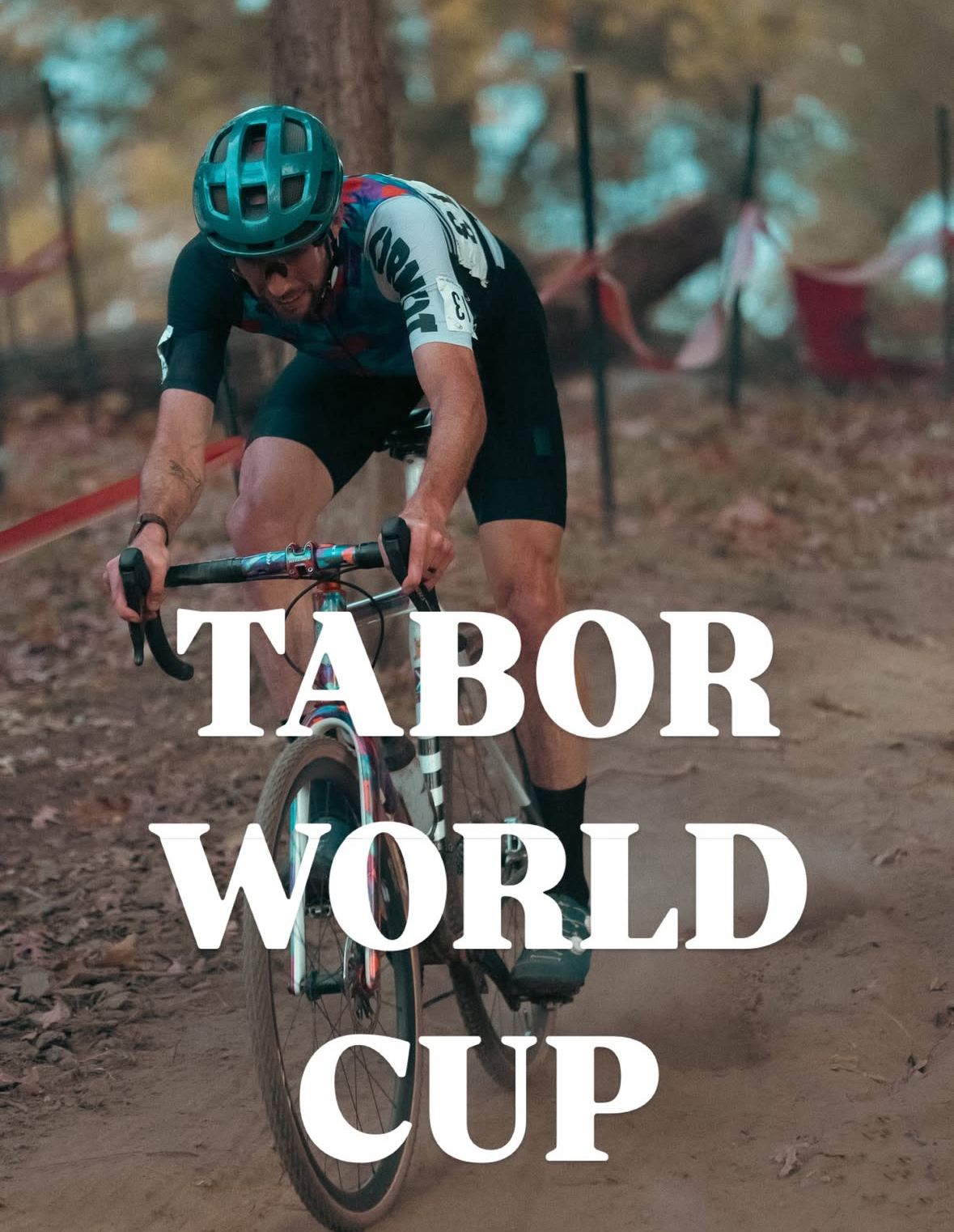
Ben: The start of these races is the hardest part for me. Lots of bodies, lots of very capable riders and only so much track. I danced the fine line of aggression and not wanting to end my race in the first 30 seconds. Made it through cleanly, only to come around the first bottleneck with bodies on the ground in front of me. A quick dismount to avoid the carnage had me slip on the absolutely frozen ground, stalling my progress, watching the leaders disappearing ahead. Honestly, I had prepared for something like this happening so I did my best to not freak out, and get on with the job at hand. One of the said bodies was Pim Ronhaar, a very pro front runner who had slipped out in the first turn. So for almost a whole two minutes I got to ride behind him, and be a fanboy in the race while racing. Man, good people are good. I had a similar experience on the second lap when Cameron Mason came blitzing through from a first lap flat on his way to a top 10 finish. Fast is fast, and these guys are on a different planet. 

My coach and I decided that we would go all in for the first three laps and really not plan beyond that, the subtext being that it didn’t matter how I felt after those three laps, because we had to keep the taps wide open for as long as I was out there. Three laps in at around 20 minutes, I was completely on my limit and had to fight the overwhelming feeling of “I can’t hold this for another 40 minutes…I should ease up”. Instead I committed to going section by section. Hitting each climb with everything I had, and doing my best to recover on the downhills, but not think of the climb to come. Then hit the climb with everything I had. Repeat until I get pulled. Except…I didn’t get pulled!!

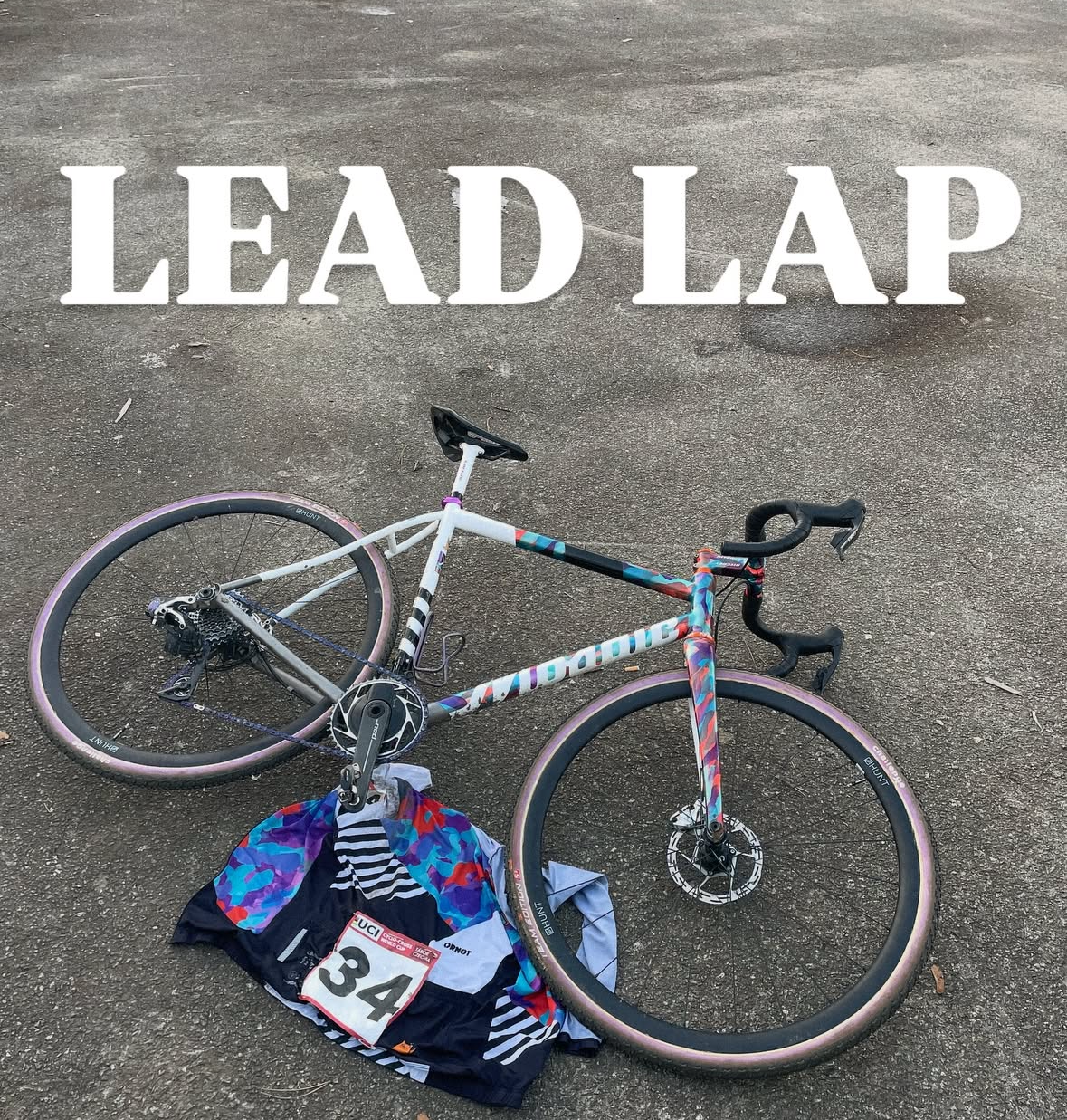
LEAD LAP. AGAIN. How does this one feel compared to Dublin last year?

Ben: Oh man, this one felt really, really good. In some ways this one was more special than Dublin (even though I was crying in relief in Dublin on my last lap). After Dublin, I lined up for 9 more races in an attempt to again finish on the lead lap and couldn’t capture that magic again. I’ve kept working as hard as I can to be the best rider I can be, and to have it validated with another surprise lead lap was really amazing. And I wasn’t even the last guy on the lead lap. In fact there were four of us battling to the line to try and get a few more spots ahead. Given the mess at the start, this was no gimme result, I had to earn it with every pedal stroke. I’m hugely proud of the ride and most importantly how I committed fully to the plan. The result was just the bonus. 
SO you headed back to SF feeling pretty good for like, three days and now you’re in Sardinia for another World Cup?

Ben: I’m actively typing this on a plane back to Europe. I spent a jet lagged week at home for thanksgiving with my lovely fiancé and kittens before hopping back across the pond to the island of Sardegna. I made the trip out last year and fell in love with the area, having one of the best cultural experiences of my life. I even made a video about it. Spoiler alert, the race got cancelled mere hours before the start because of a wind storm that destroyed the course. In some ways, a ton of effort and money was wasted to ultimately not race the World Cup there. So we’re coming back for redemption and to keep filling my bingo card of “countries I’ve raced in”. 

I can’t emphasize enough how much of a privilege it is to be here, doing this thing. In a lot of ways, I’m the 22 year old Cat 4, binging Behind the Barriers, hoping that one day, he could be a pro rider. I’m also the Traumatic Brain Injury Survivor who never thought he would be able to ride a bike again, much less race, much less at the professional level. And while it doesn’t look like the way I had imagined, I’m out here, racing the best in the world, while being able to count myself as one of them. 

Thanks Ben. Keep doing the thing you’re doing and good luck in Sardinia!

The Three Big Advantages of a Made-to-Order Mosaic

For many riders, the idea of a custom bicycle can feel a little overwhelming. Do you really need a custom bike? Where do you even start? It can be a lot to take in—and we totally get it. That’s why we’ve spent nearly two decades refining the Mosaic Made-to-Order process, available on all Level 1 Mosaics, into something that simplifies the experience while achieving the most important goal: delivering the best ride possible, tailored precisely to you, the rider.

Size Matters Most – Here’s How We Approach It

Some riders seek out custom bicycles because there’s simply no other option for them. If you’re on the edge of the physiological bell curve—very tall or rather short—your mainstream production bike options are limited. Even riders of so-called average height can benefit from Made-to-Order frame sizing if their fit deviates from industry standards due to injury history or unique body proportions.


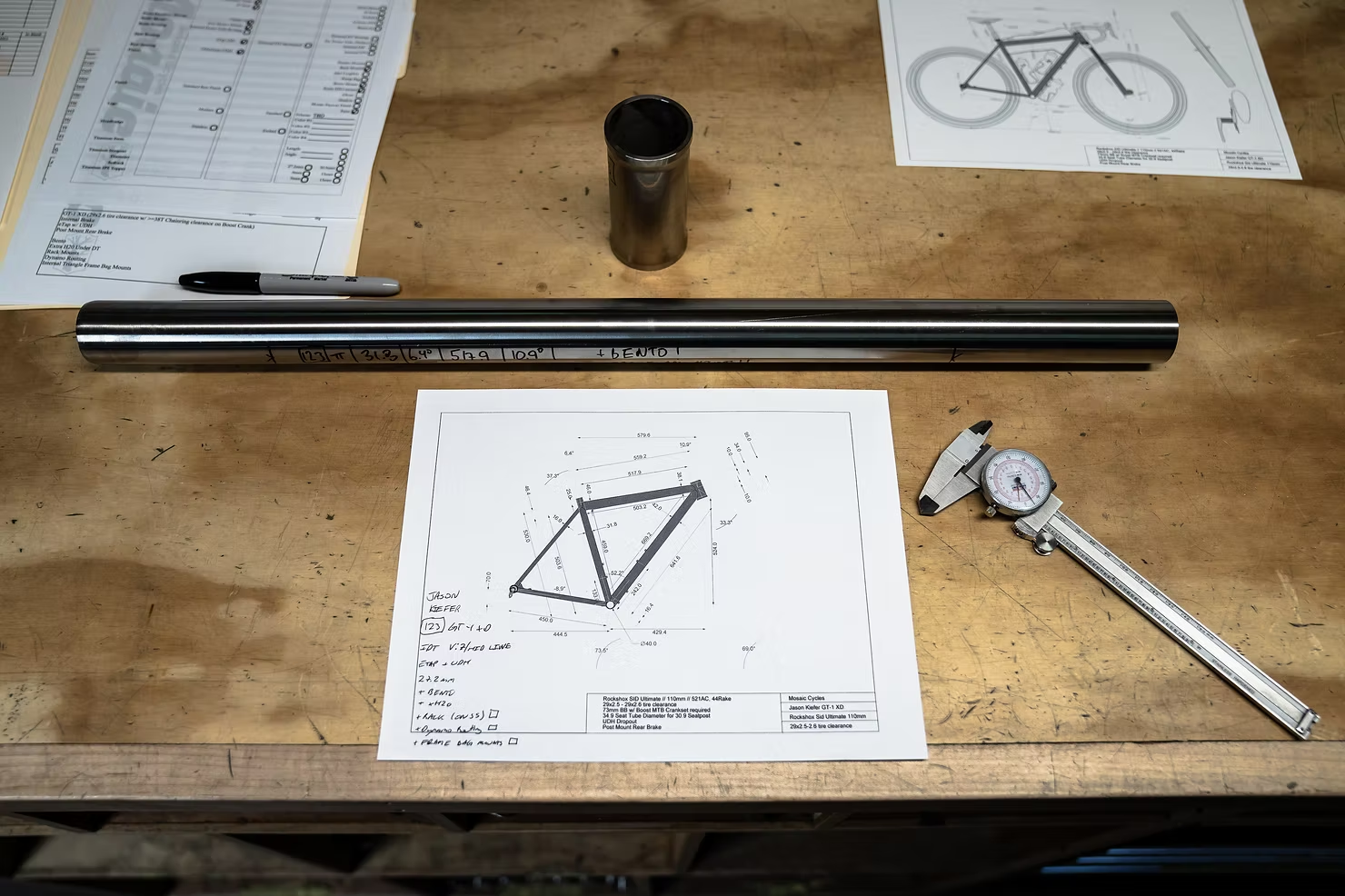
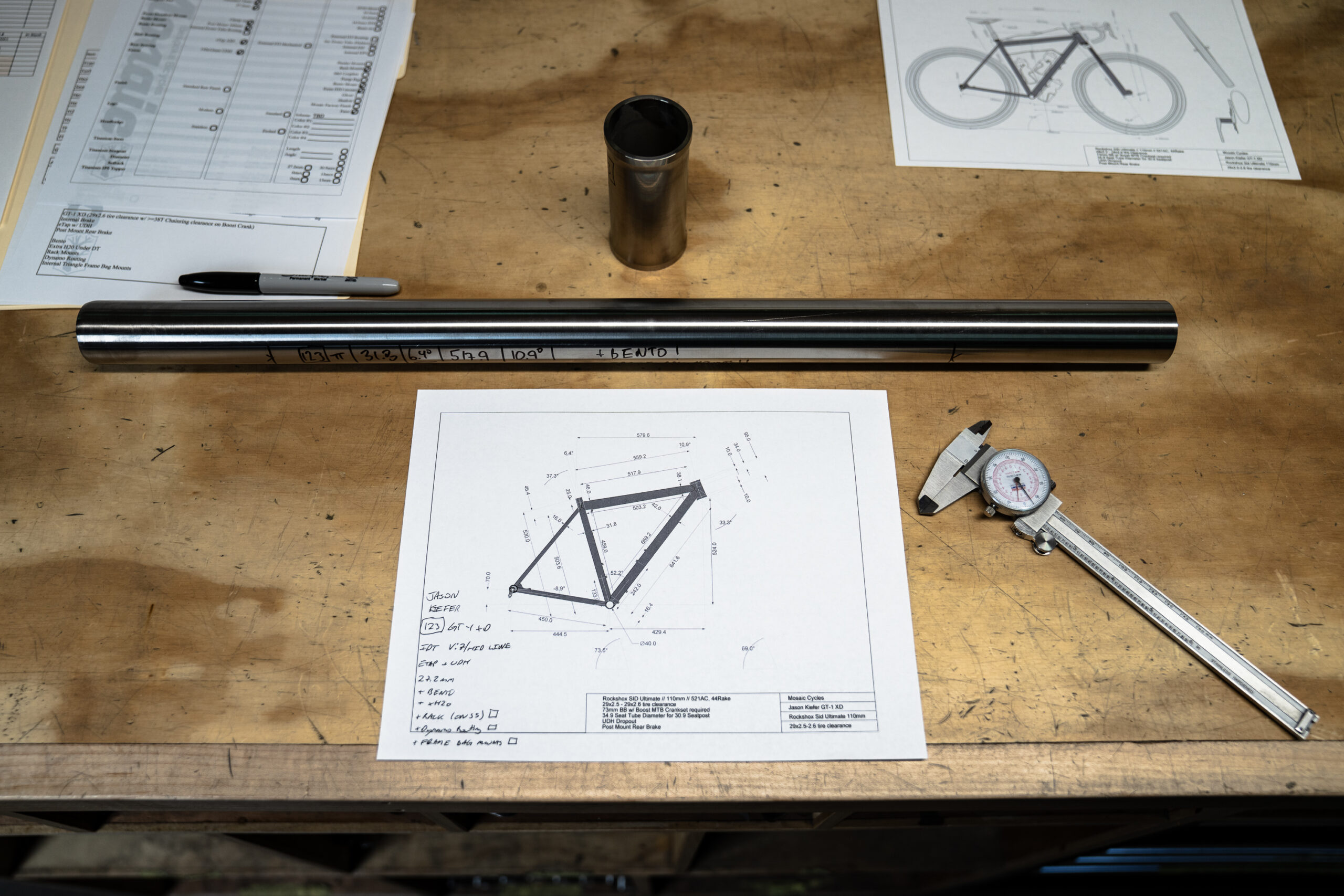
That said, you don’t need an uncommon body type to benefit from a Made-to-Order Mosaic. Maybe you have a favorite bike you’d like to replicate in bespoke titanium, or you already know how you want your next bike to fit and feel. Whatever your scenario, the Mosaic Made-to-Order process addresses every nuance of your fit and preferences, integrating them into your frame design. If you have numbers from a professional fit or your Mosaic Dealer, we can work from those, or we can help connect you with a qualified fitter in your area. We can also start from your current bike’s geometry, talk through what you like and what you’d change, and go from there. Every Made-to-Order Mosaic begins with a conversation, evolves into a detailed drawing, and ends with a frame design tailored precisely to your body and riding style.

Ride Quality Tuned to the Rider – Taken to the Next Level

Production bicycles have come a long way, and many large brands now offer size-specific frame stiffness and compliance. That’s a big step forward from the one-ride-fits-all approach of a decade ago, but it still relies on a few assumptions: smaller riders are light, taller riders are heavier, and everyone in between is “average.” For mass production, those assumptions are necessary, but in the real world, riders come in all shapes, sizes, and strengths—and that’s exactly what the Mosaic Made-to-Order process accounts for.

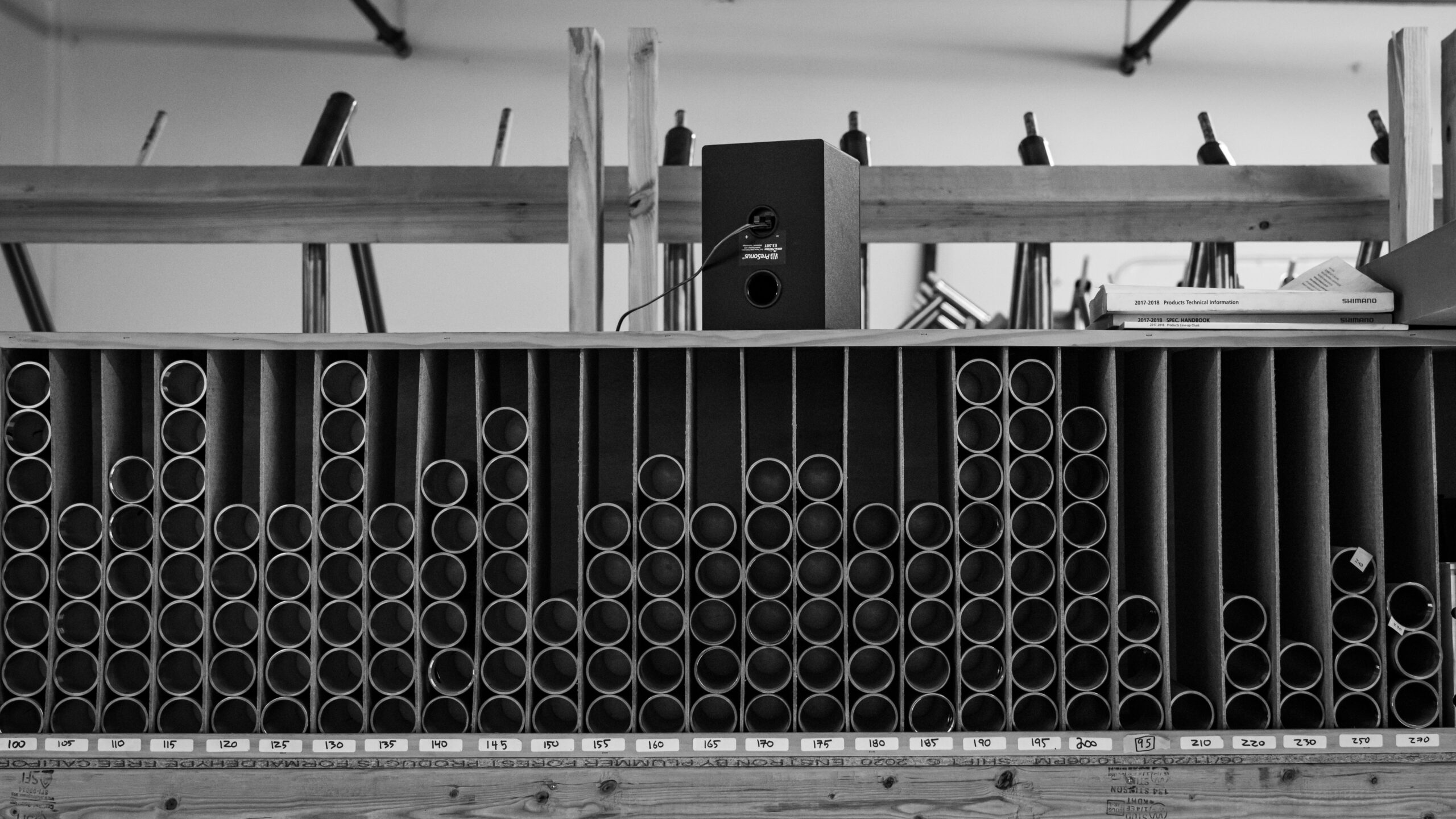
Each Made-to-Order Mosaic starts with our most refined seamless butted titanium tubing. From there, we select from a wide range of tube diameters, wall thicknesses, and butting profiles to tune stiffness and compliance based on the rider’s body type and ride preferences. A tall yet slender rider might receive a lighter, more supple tubeset than a similarly tall but thicker rider, who’d benefit from a stiffer setup. Even two riders of identical build might have entirely different riding styles—one a high-cadence climber, the other a torque-heavy sprinter—and Mosaic accounts for these distinctions from the very beginning of the Made-to-Order process. 

Nailing the Details – The Options and Extras that Make All the Difference

Maybe you prefer to carry a frame pump and want a pump peg (and maybe even a paint-matched Silca frame pump). We can do that. You might want top-tube bag mounts, fender mounts, or a third bottle boss on your road frame. Maybe you’d like rack mounts on your hardtail or a choice between 30.9 mm and 31.6 mm seat tubes to fit a dropper post you already own. All of this is part of the process. 

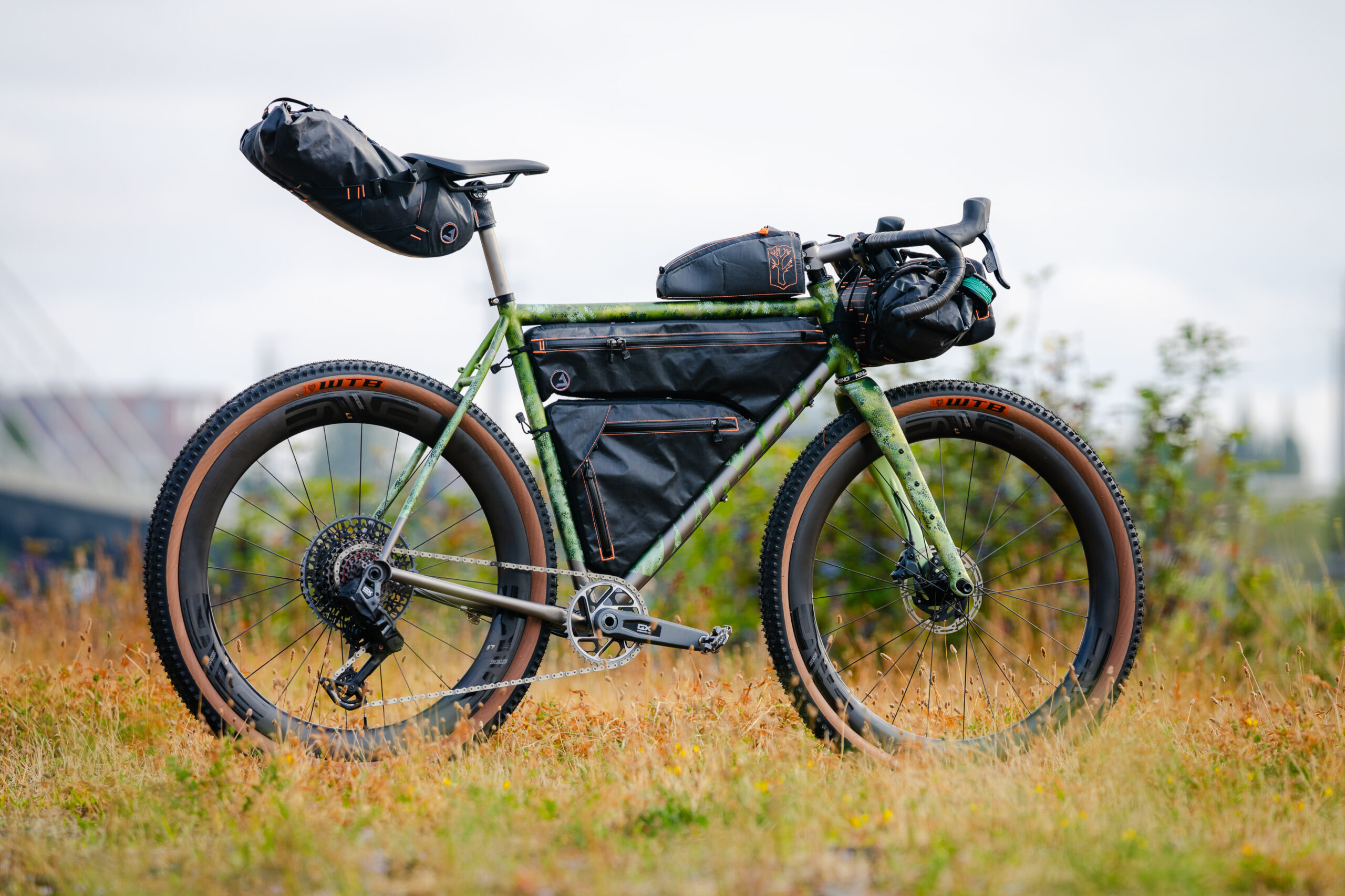
Mosaic GT-2 X Titanium Adventure Bike

And, of course, there’s the Mosaic Finish Program, offering an almost endless array of paint and finish options, from media-blasted raw titanium to intricate, one-of-a-kind Artist Series designs and everything in between.

A Made-to-Order Mosaic takes the complexity out of customization, blending nearly twenty years of craftsmanship with a process built around you. From precise fit geometry to ride-tuned titanium tubing and tailored details, each frame is designed to match your body, style, and vision. The result is a truly personal bike that rides—and looks—like nothing else.

The Made-to-Order Mosaic experience comes standard with all Level 1 road, mountain and gravel framesets. Ready to build your dream bike? Start with your local Mosaic Dealer or contact us directly at info@mosaiccycles.com or @mosaiccycles on Instagram.

Bike Check: Cumberland RT-Zero with Campy Super Record 13 Wireless

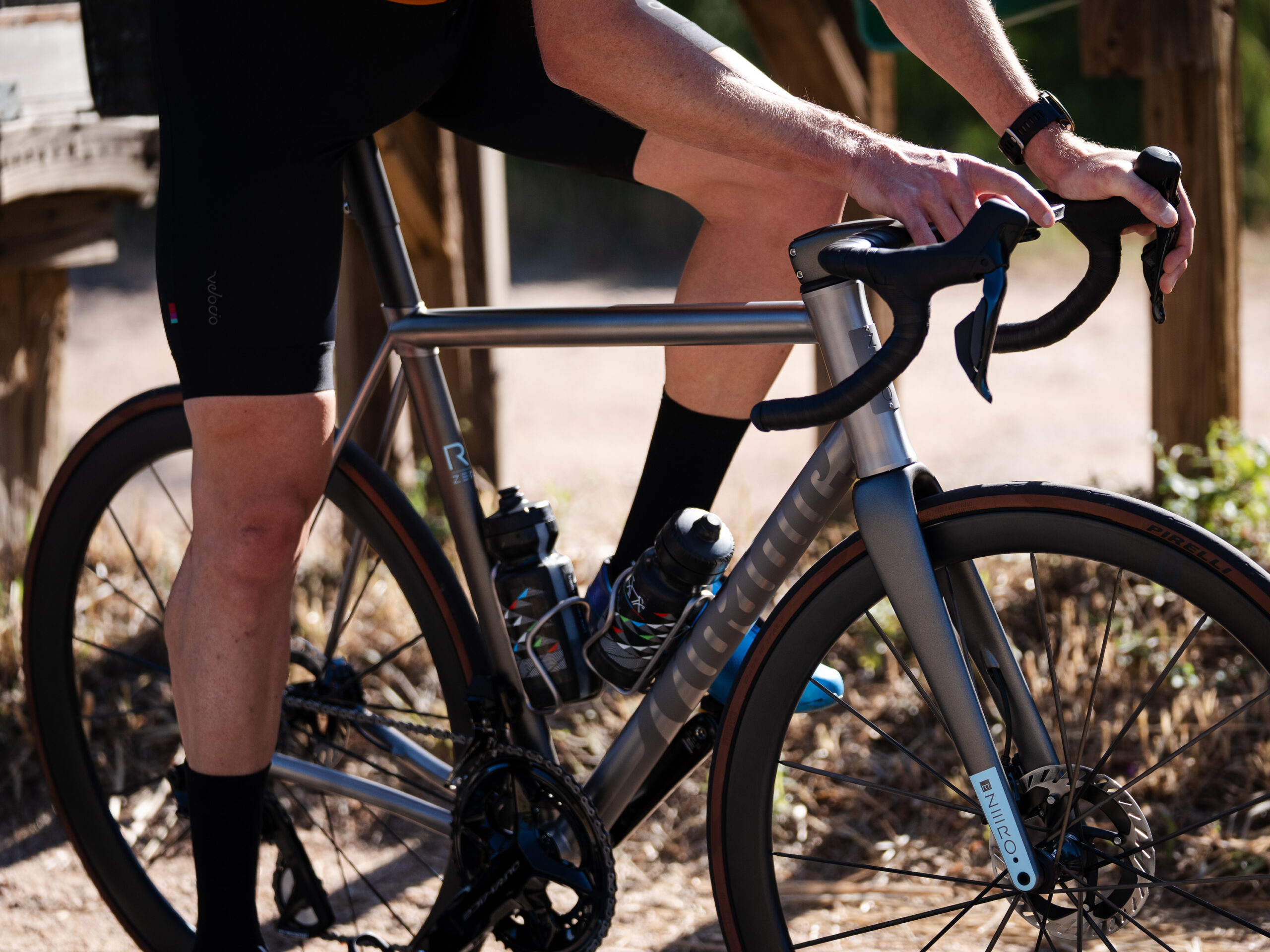
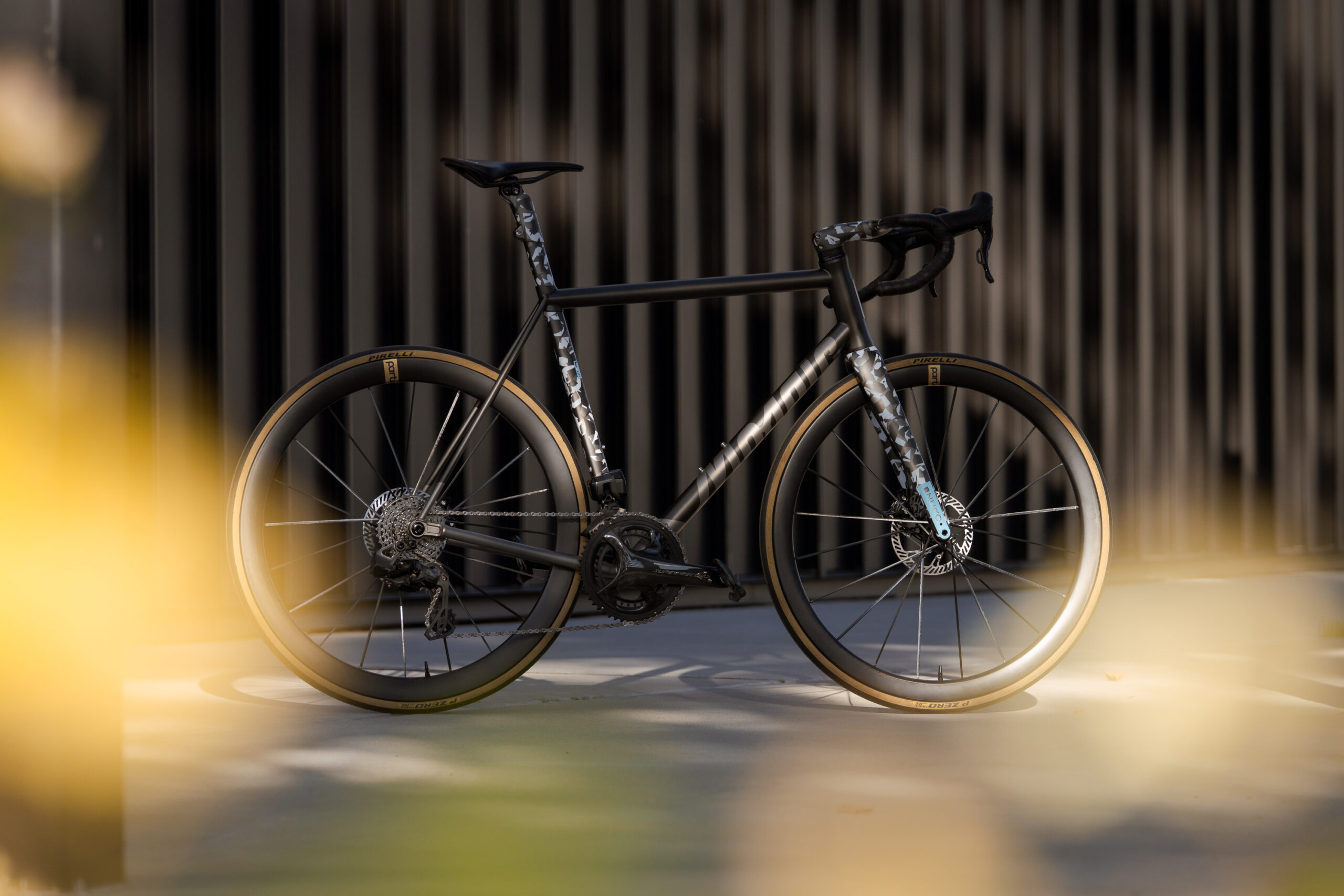
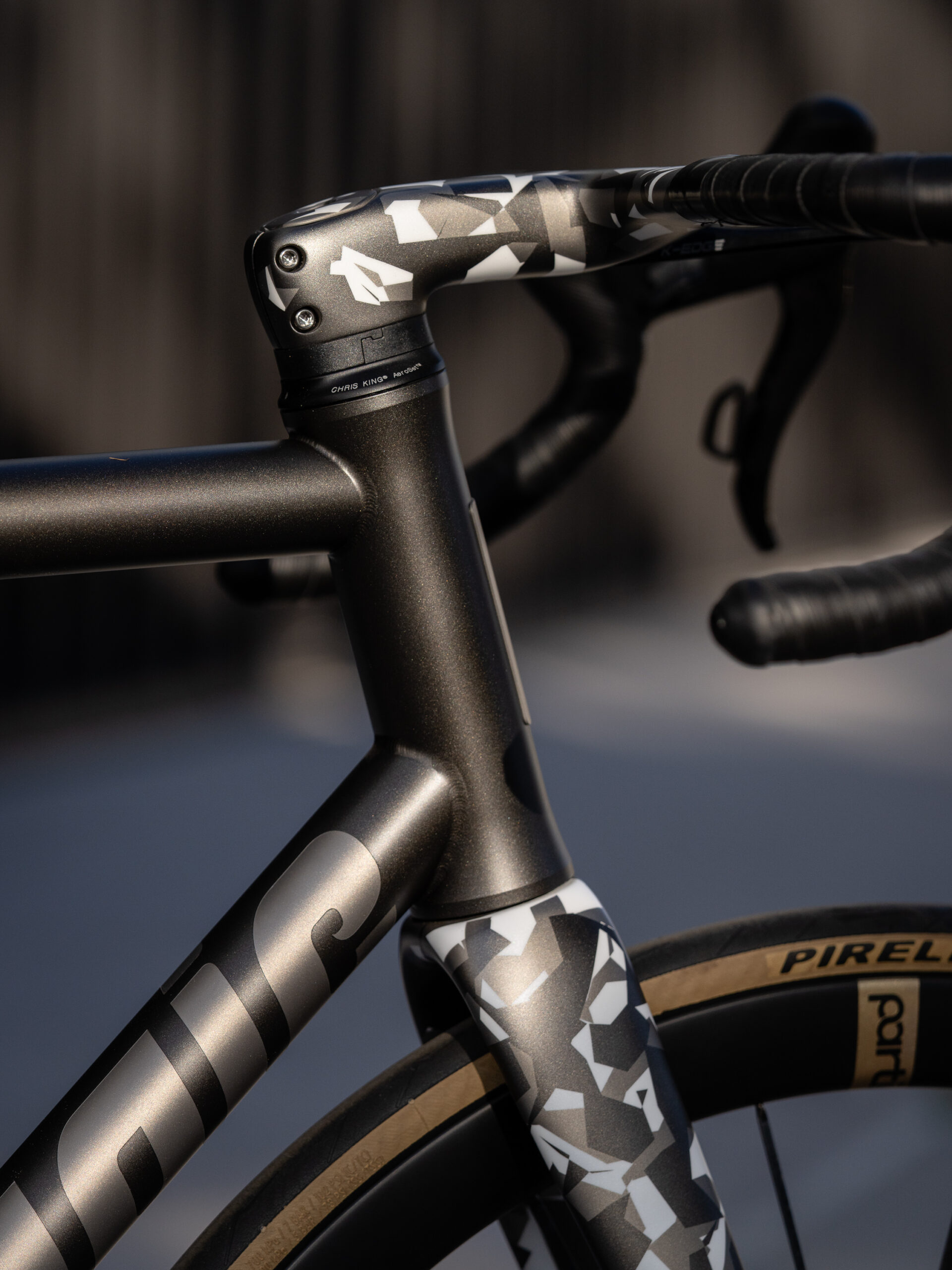
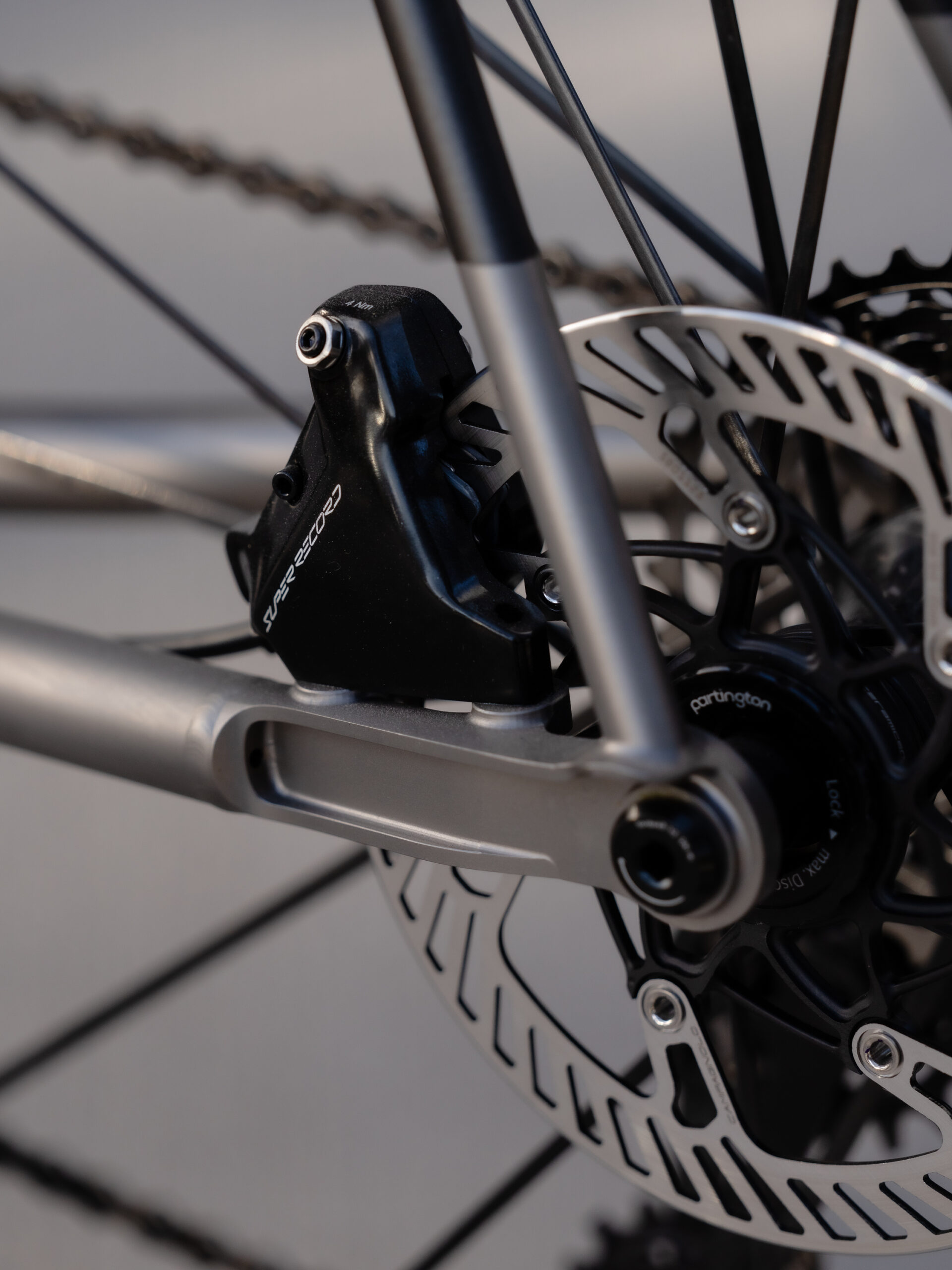
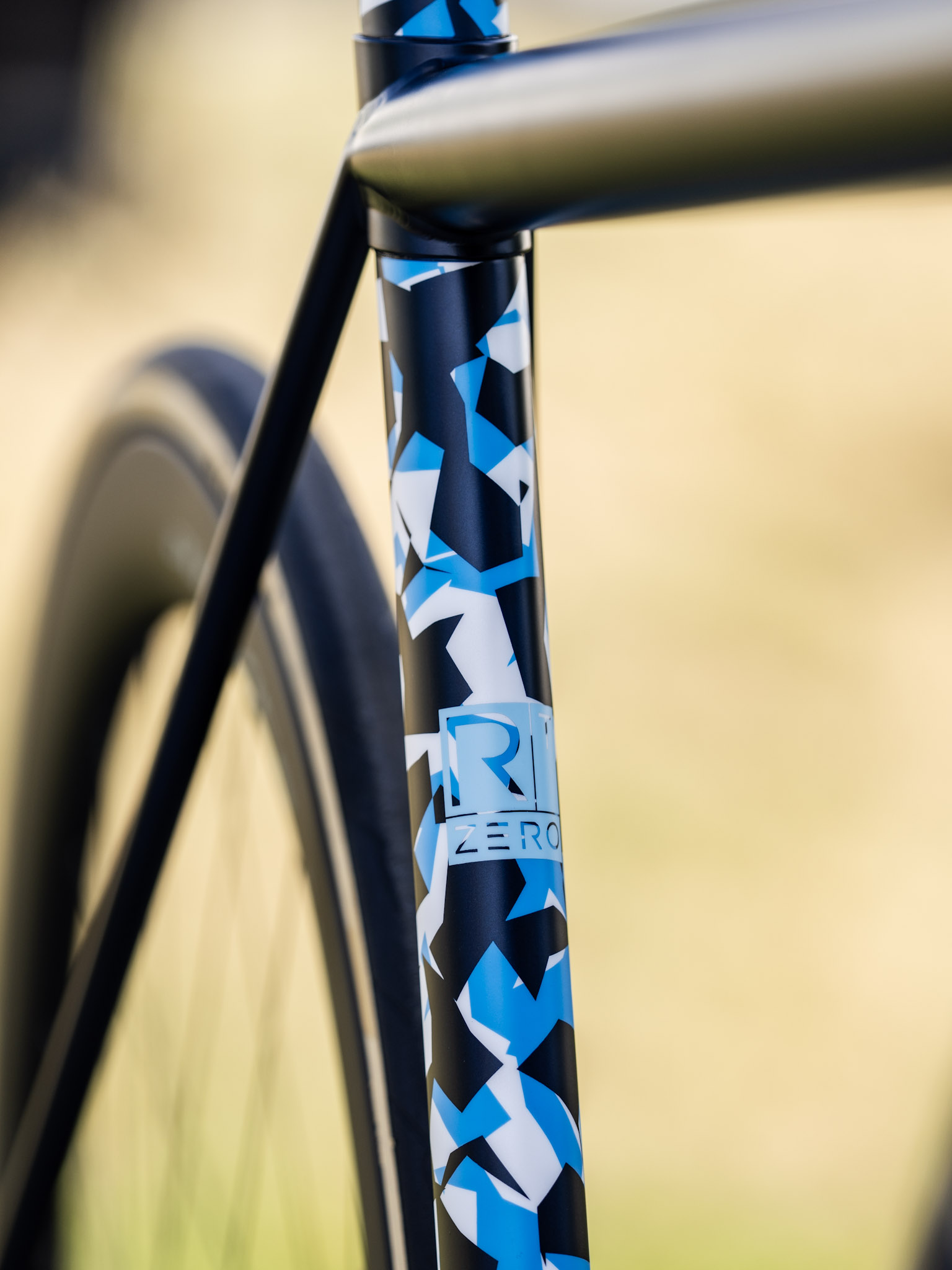
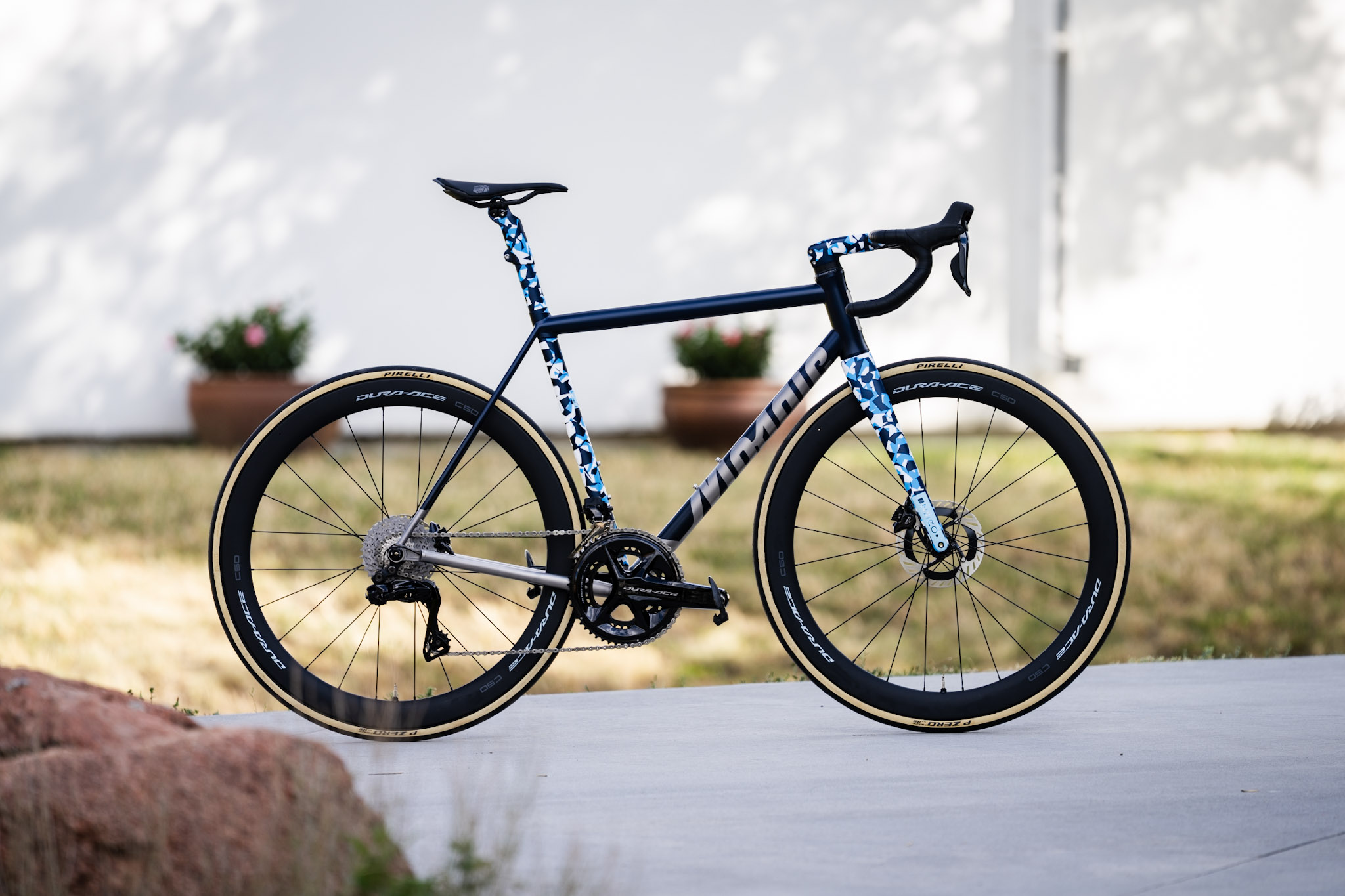
This build turns the dream-bike dial up to 13. Starting with one of the last framesets from our limited-run RT-Zero series, we paired Campagnolo’s brand-new (and many say best-ever) Super Record 13-speed wireless groupset with the superlight Partington R-Series MKII 39/44 Gold wheelset. Finished in a Cumberland Grey version of the RT-Zero-exclusive Shatter Camo Artist Series finish with a matching Mosaic Zero Ops carbon seatmast topper and ENVE cockpit, it’s one of the most exotic high-performance builds to roll out of the Mosaic shop.

-Mosaic Zero Ops RT-Zero frameset with carbon seatmast – 54cm

-Partington R-Series MKII 39/44 Gold Wheelset

-Campagnolo Super Record 13 Wireless

-ENVE SES AR Bar/Stem

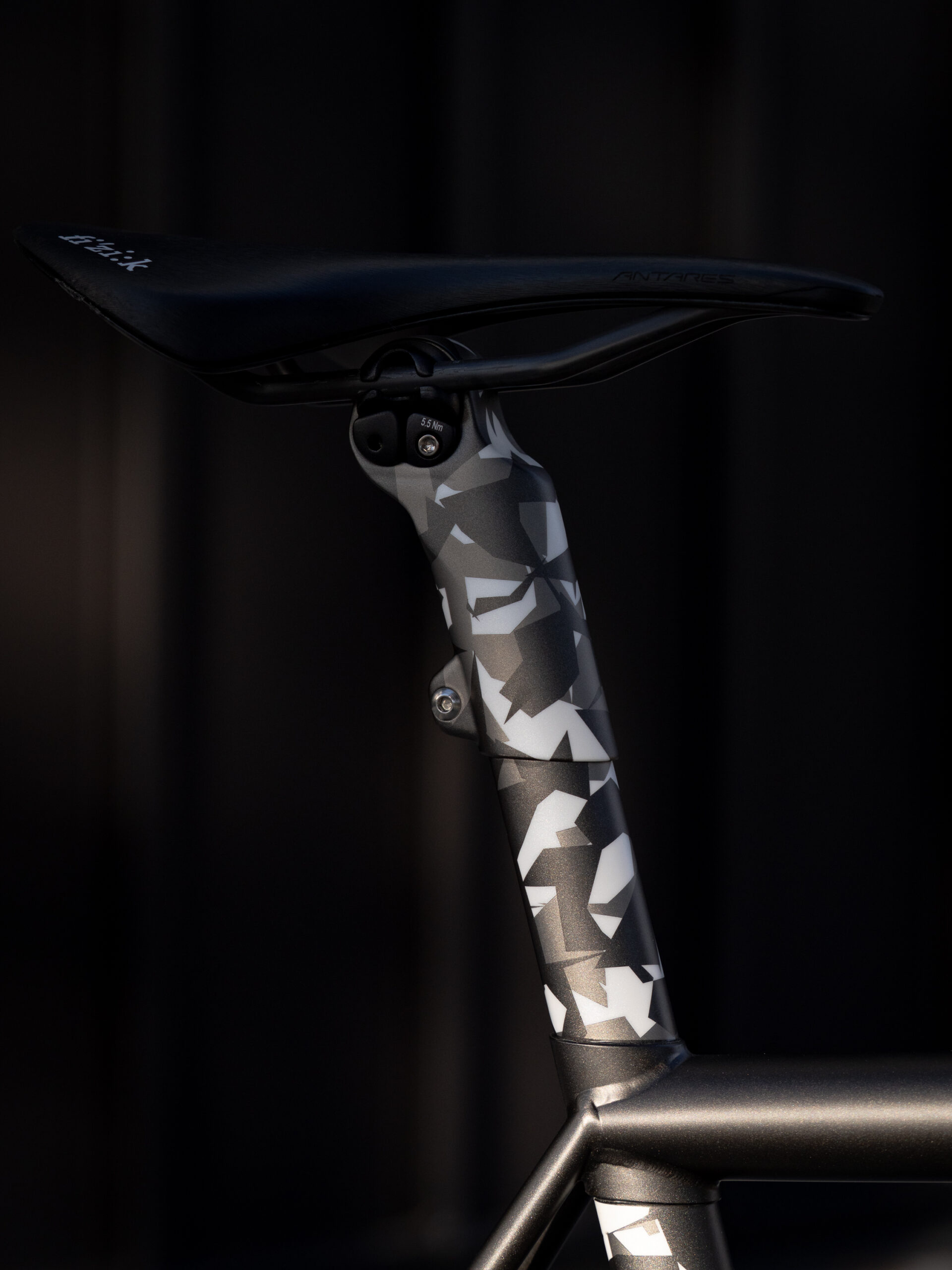
-Mosaic Zero Ops Carbon Seatmast & Topper


Bike Check: Ben Frederick’s XT-1 CX Race Bike

Bike Check: Ben Frederick’s XT-1 Cyclocross Race Rig

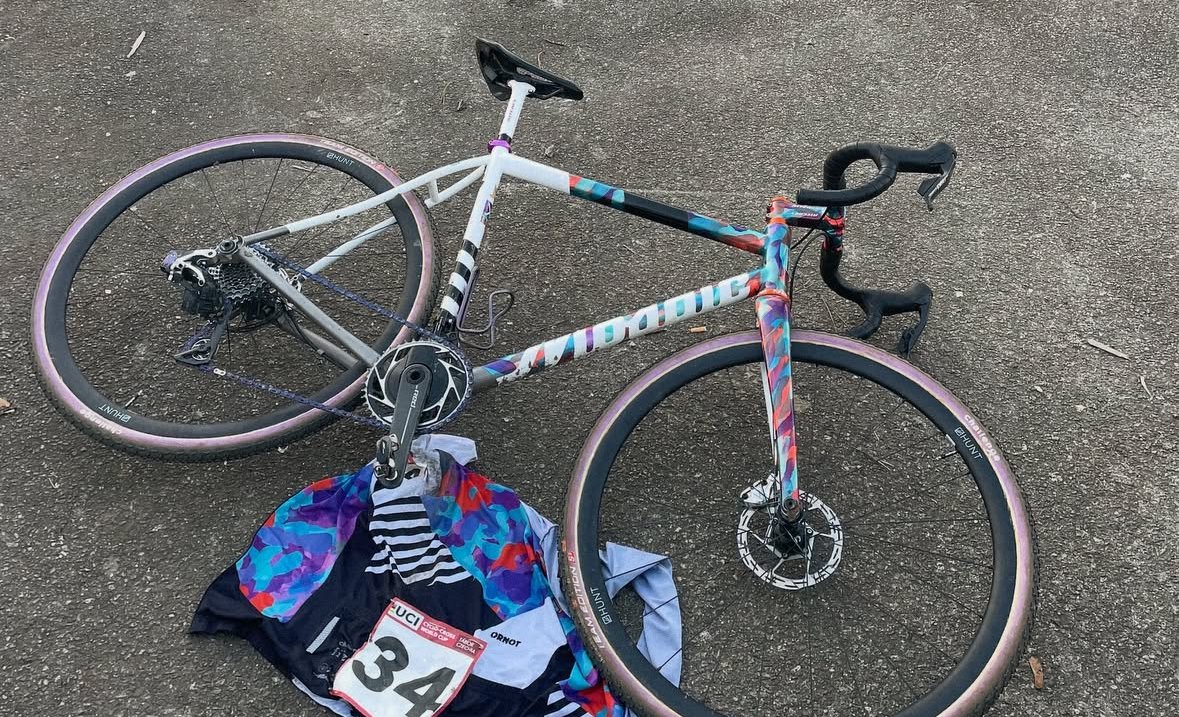
It’s November and #CrossIsDefinitelyHere, which means Mosaic Rider Ben Frederick is already busy chasing podiums in the biggest cyclocross races in the US. Fresh off last year’s successful Project Lead Lap Campaign in the European World Cup Cyclcocross circuit, Ben’s battle-tested race bikes are still good to go, but we gave them both fresh Artist Series Finishes for the 25/26 season anyway.

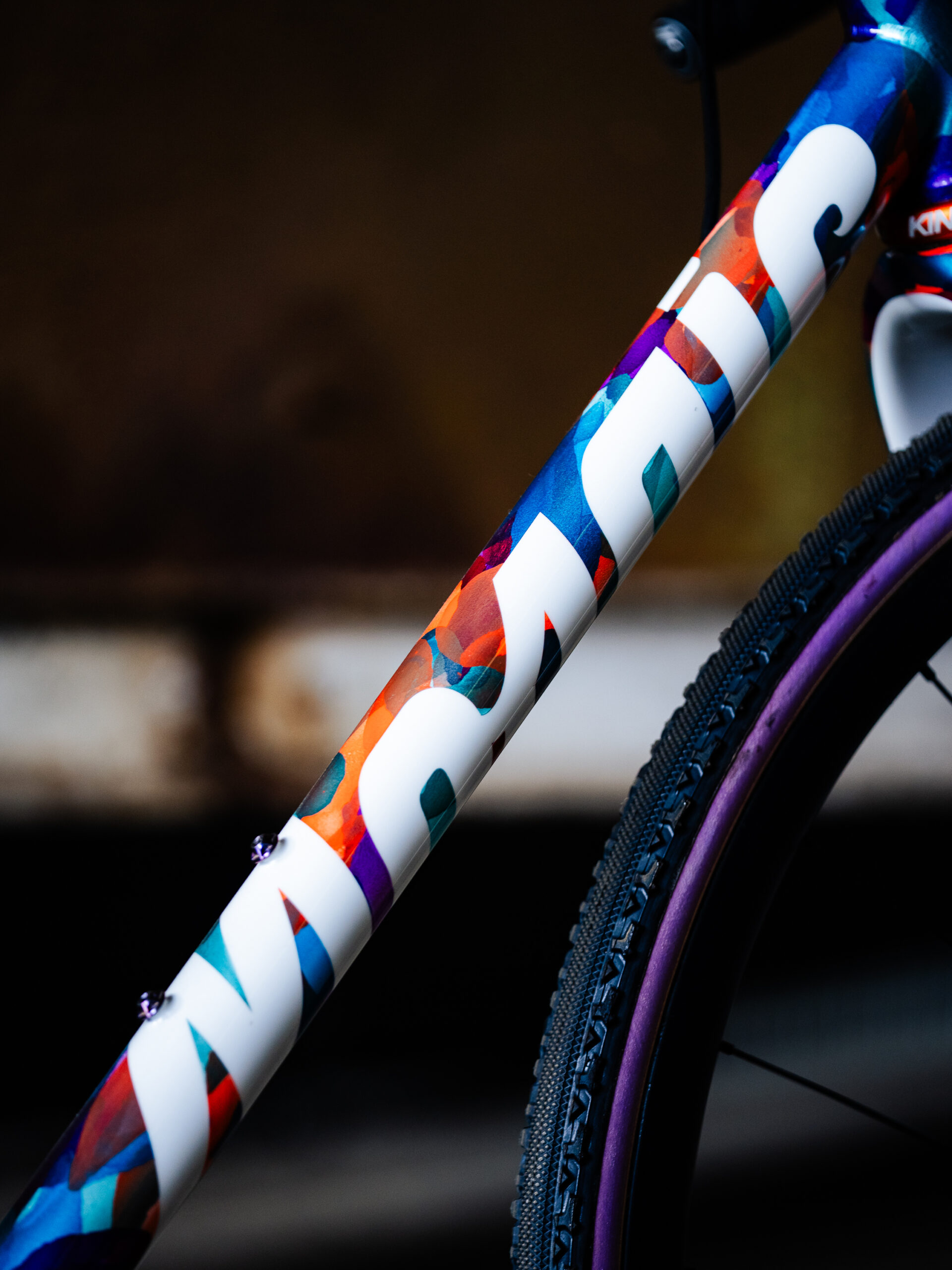
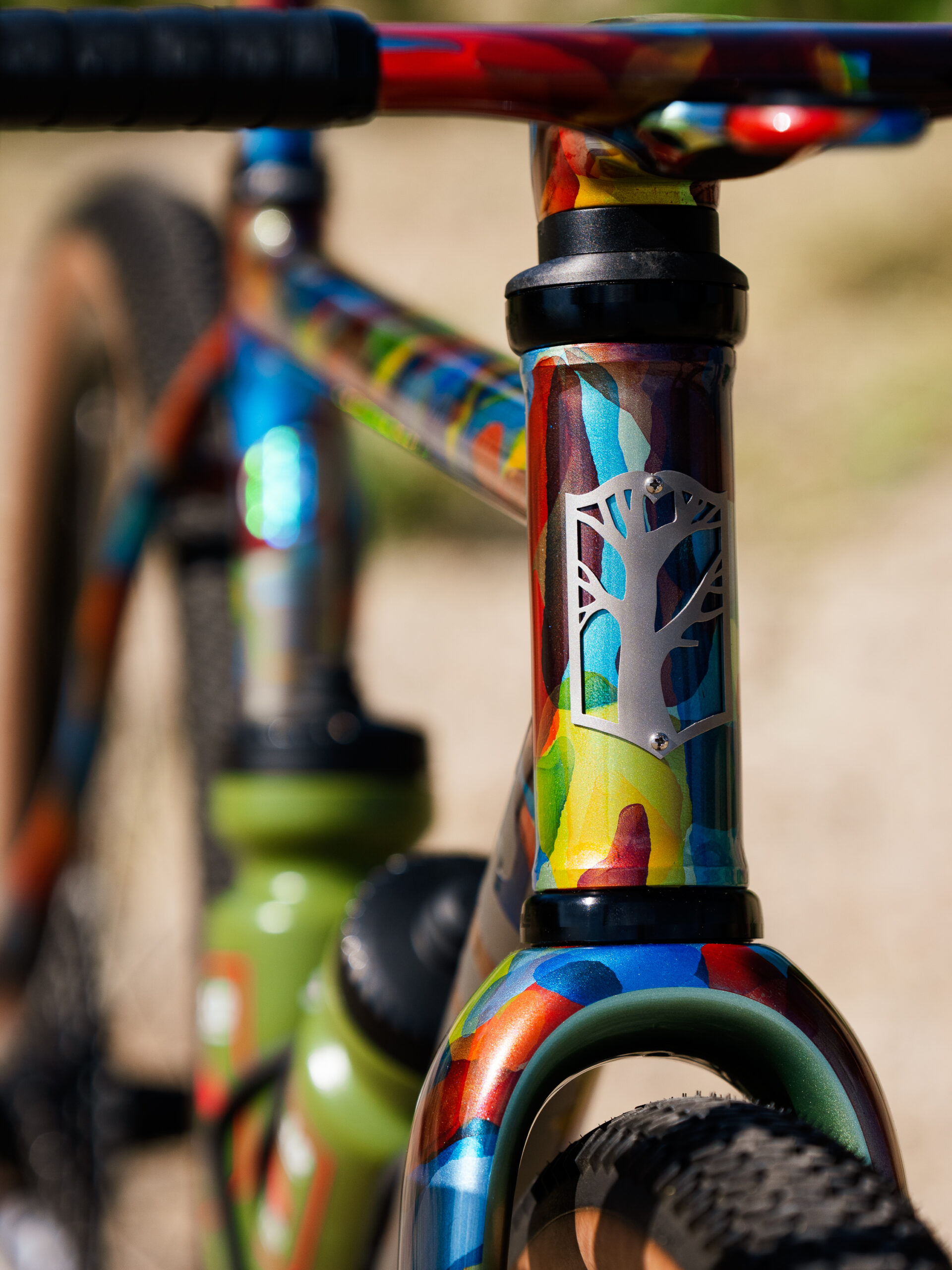
Last year’s bikes showcased Ben’s own Small Monsters motif; for this year we took that theme and color pallet and gave it the Artist Series Nebula treatment.

Here’s a closer look at one of two.


Bike Specs:

Frame: Mosaic XT-1 – Made to Order 

Finishwork: Mosaic Artist Series Nebula x Small Monsters Project

Groupset: SRAM Red; 42t ring with 10-36t cassette

Cockpit: Ritchey WCS, 42cm bar

Wheels: Hunt 

Tires: Challenge Chicane Team Edition, 700x33cc 

Others Sponsors: Silca, Lake, Smith, AHHA, Chris King, Ornot

Mosaic x Builders for Builders 2025

Great trail networks don’t build themselves. They come from hard work, vision, and usually, a ton of support of the riding community. Each year, the Builders for Builders campaign brings together a select group of custom framebuilders to raise money for the Sierra Buttes Trail Stewardship, and in 2025 Mosaic is proud to again be part of the effort.

The idea is straightforward: with every $10 donation, you are entered to win a custom bike built by one of the participating builders. The winning frame will be finished with a unique paint design and completed with a premium build kit from Paul Components, White Industries, and WTB. It is an opportunity to ride something entirely one-off while helping fund the trails that make our rides possible.

Mosaic Cycles GT-1 iAR
For this year’s fundraiser, we contributed a made-to-order GT-1 iAR: our full-integrated titanium all-road rig coated in our Scale Artist Series finish. With clearance for up to 40c tires, this capable machine is equally suited for ripping up road miles as it is carving the trails and singletrack, sometimes in the same day. And it could be yours for ten bucks that goes to helping build more great riding for all of us. 

Dive into the details and donate to win here

How It’s Made: Mosaic’s Ross Leopold Takes Us Behind the Scenes of the RT-Zero Development Process

We put a lot into our bikes. Even seemingly straightforward, batch-built Level 2 Mosaics require a ton of design, engineering and attention to detail, and that’s before tubes are cut and the torch is fired up. So you better believe that for the new Limited Edition RT-Zero, being the first model of our Zero Ops program, was an all-hands, above-and-beyond sort of effort. Just what goes into developing this model? 

We caught up with our own Ross Leopold to find out.


First, What’s your role at Mosaic? What’s your background? How did you get here?

Ross: I’m a framebuilder and engineer at Mosaic.

It all started when some family members got me into bikes at a young age. At 14, I walked into my hometown bike shop, The Okoboji Cyclist in Milford, Iowa. I asked if they were hiring, and that’s where it began. That job led me to pursue a degree in Mechanical Engineering at Colorado State University, always with the goal of bringing that knowledge back into the bike industry. I kept working at the shop between semesters, and after seven years there and four years of school, I was ready for a “big boy job.”

Being in Colorado for college was perfect. Not just for the riding, but because I was surrounded by so many great companies in the industry. I’d always admired Mosaic, and when a listing went up during my senior year, I applied. After a phone call with Aaron and a visit to the shop, I started part-time right after finals that semester, continued through spring, and then went full-time after graduation. Almost three years later, here I am…time flies.

When did the RT-Zero project officially start?

Ross: The idea predates me joining Mosaic. Aaron and Mark had started down that road, but the timing, cost, and scale weren’t right—and the team needed someone with the skillset to take it on. This was also just before the bike industry boom of 2021–22, so it wasn’t the moment to launch a project like that.

When I joined, the RT-Zero was something we talked about but hadn’t picked back up. I came on board to learn production first, then pivot into engineering when the timing was right. The project was officially kicked off at the end of 2024.

How did the development process for the RT-Zero begin?

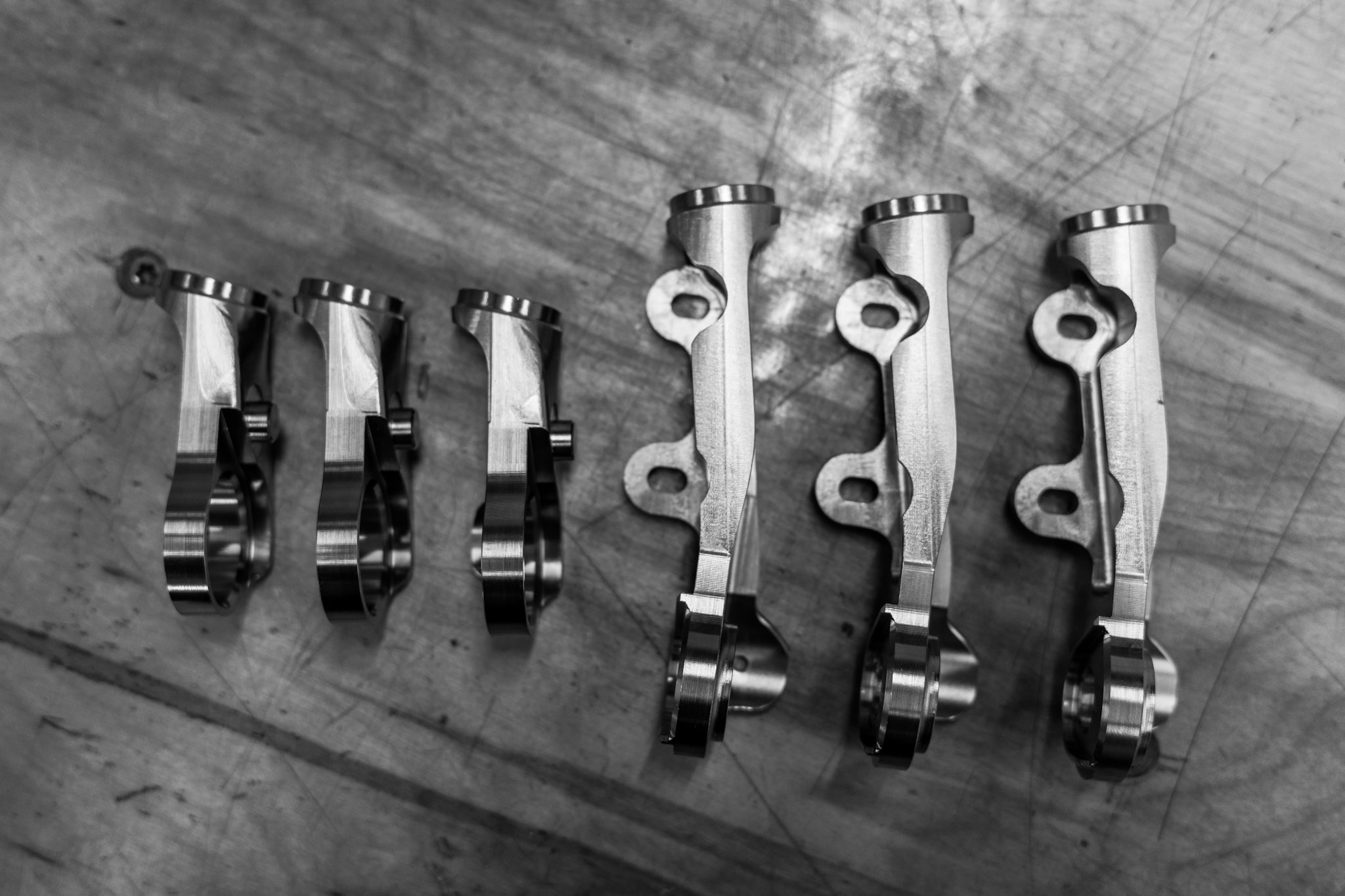
Ross: We started by defining what we wanted the finished bike to be, and what components it would include. A big early question was whether to use 3D printing. Ultimately, we decided against it. 3D printing is great for complex parts and fast prototyping, but Mosaic has always taken pride in the precision and craft involved in our build process, and for that we find CNC machined parts are hard to beat. 

I could have designed an entire chainstay cluster as one unit and had it printed, but we chose the harder path and intentionally kept as much of the process hands-on as possible. That also makes it easier to tune the geometry for the rider, since these are made-to-order only frames. 

Which components did you design from scratch?

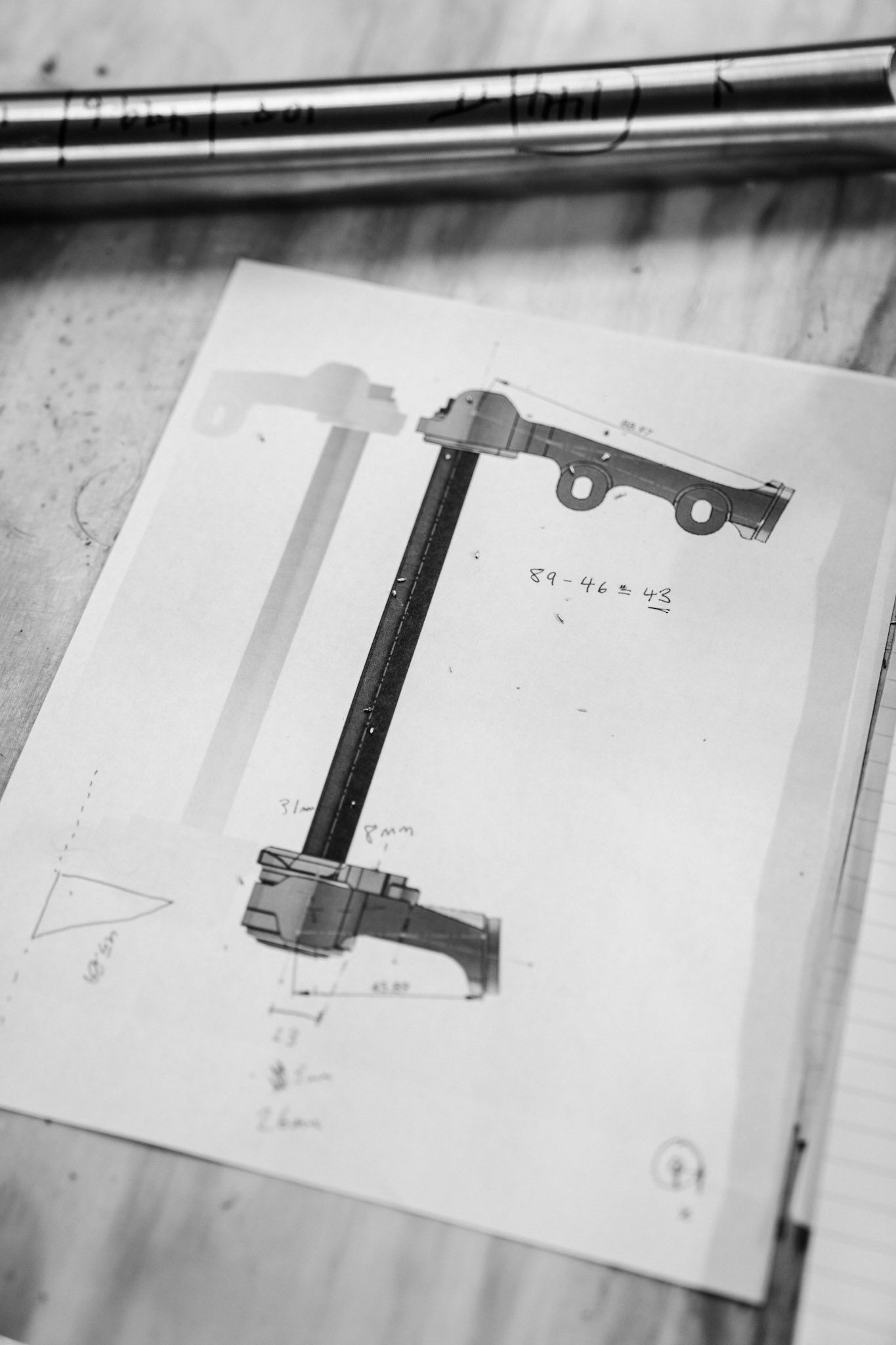
Ross: Some parts were already underway when I arrived, like the proprietary D-shaped carbon seat mast, seat stay collar, and T47 bottom bracket shell, though they needed tweaks for both function and aesthetics. From scratch, I designed the carbon seat mast topper, the shaped IS52/IS52 headtube, and the integrated dropouts. Beyond the parts, we also had to create new assembly fixtures. 


What role did prototyping play in the process?

Ross: Prototyping was done in CAD, which made refining dimensions quick. I bought a 3D printer for scaled plastic models to visualize parts and check fitment. Much of the design work was about refining aesthetics and production methods. Everything needs to ride and perform flawlessly, while still looking distinctly Mosaic.

How did you handle testing and validation?

Ross: Much of the testing and validation happened in CAD. Integrating carbon with titanium isn’t new, so we weren’t charting completely unknown territory. The challenge was improving upon our highly regarded RT-1 ITR, so we built a dedicated test bike refined from there. 

What’s different about the RT-Zero in terms of the build process?

Ross: A big goal for the RT-Zero was that it could slot into our existing production flow. Like our other models, chainstays are batched and components prepped beforehand. The main difference is the absence of a seat tube—the carbon mast is installed after the titanium chassis is welded.

Ross: I designed an adjustable dummy seat tube that includes a heat sink for the seat mast collar assembly, so the chassis can be built just like a standard ITR. The top tube is mitered differently, since the seatstays join it directly, which is unique to the RT-Zero. After QC, the carbon mast is bonded in. It’s not overly complicated, just new.

What’s the most complicated or time-consuming step of the RT-Zero process?

Ross: Definitely aligning the top tube and seatstay construction. It’s a new assembly with a lot of room for error—the miters, the collar joint, and how everything looks once it’s together. A lot of people assume the carbon mast integration is the hardest part, but it’s actually more straightforward than the titanium work.

What unique challenges did the RT-Zero introduce?

Ross: Almost everything about it was new in some way. Not wildly different from what we already do well, but different enough that it demanded more attention. Our build process has been perfected over years of refinement to ensure our high standard of craftsmanship, ride quality and build time, and adding a new model presents a disruption in that established process. Early on, getting everything to come together smoothly was the main challenge. Now that we’ve built a few, those challenges have subsided. 

What else about the RT-Zero development or build process stands out?

Ross: I said that we didn’t apply 3D printing apart from prototyping, but that’s not entirely true. The one place 3D printing made sense was for the Di2 battery mount inside the seat mast. It’s printed from flexible plastic so it holds the battery in tension. It’s the only 3D printed part on the bike, and I kinda love that detail.


Thanks Ross, the results definitely speak for themselves! 

The RT-Zero is a Limited Edition model and of the 25 build slots offered…only five remain as of this post. 

Want one? Contact us directly or subscribe to the RT-Zero Interest List and we’ll keep you posted about future batches and Mosaic Project Zero offerings. 

BIKE CHECK: Mosaics of MADE 2025

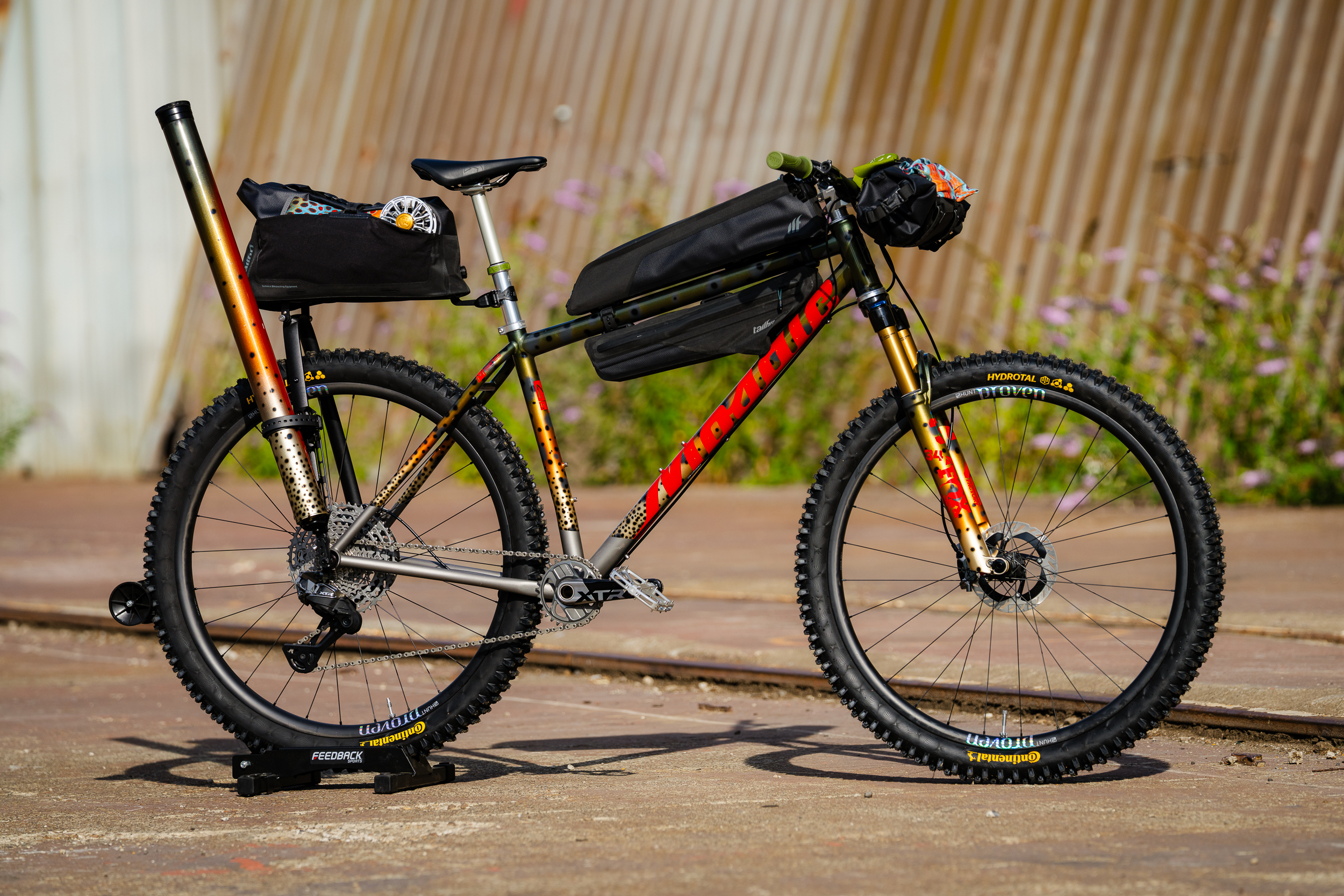
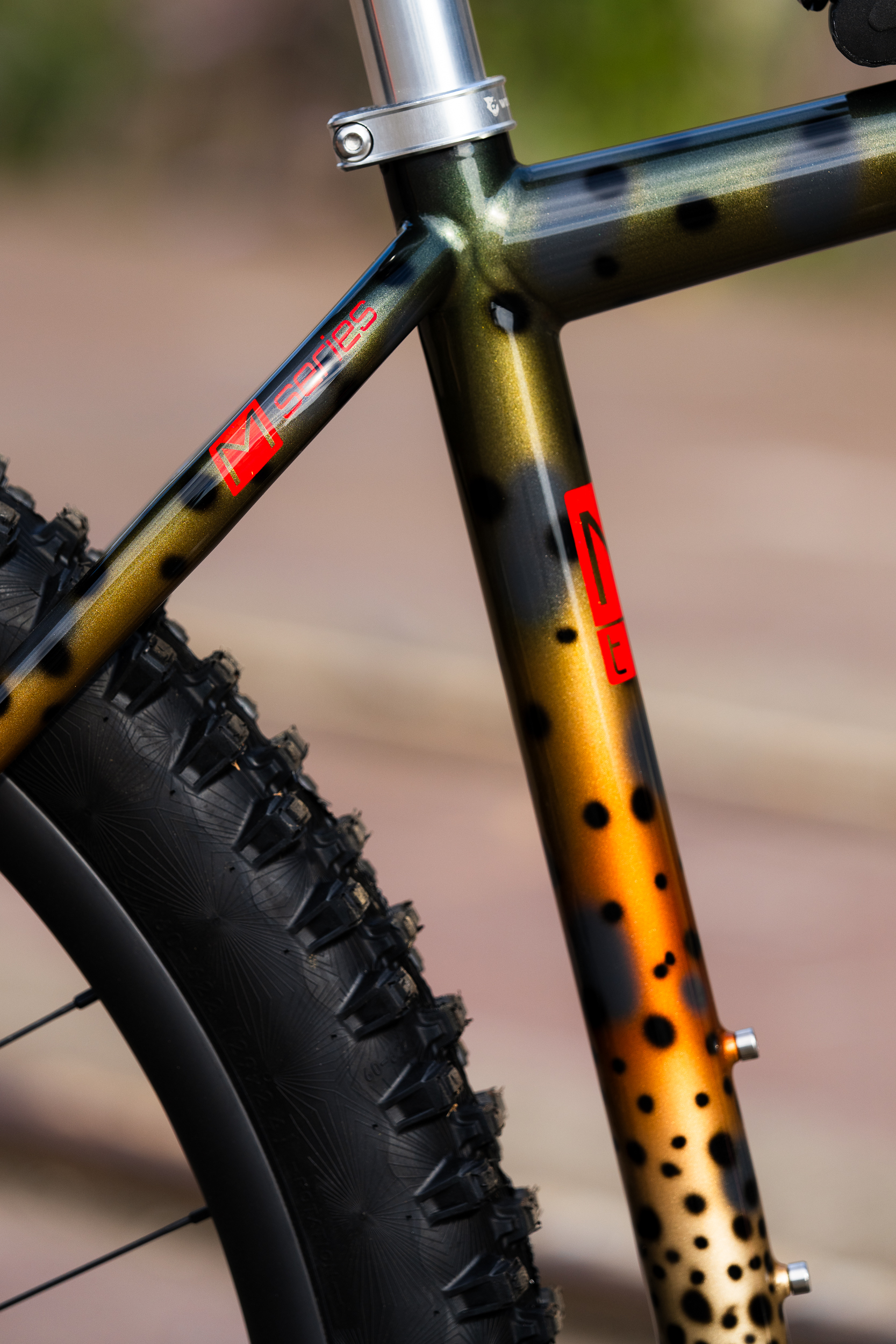
MADE 2025 Show Bike #2: Mosaic MT-2 Trail Trout

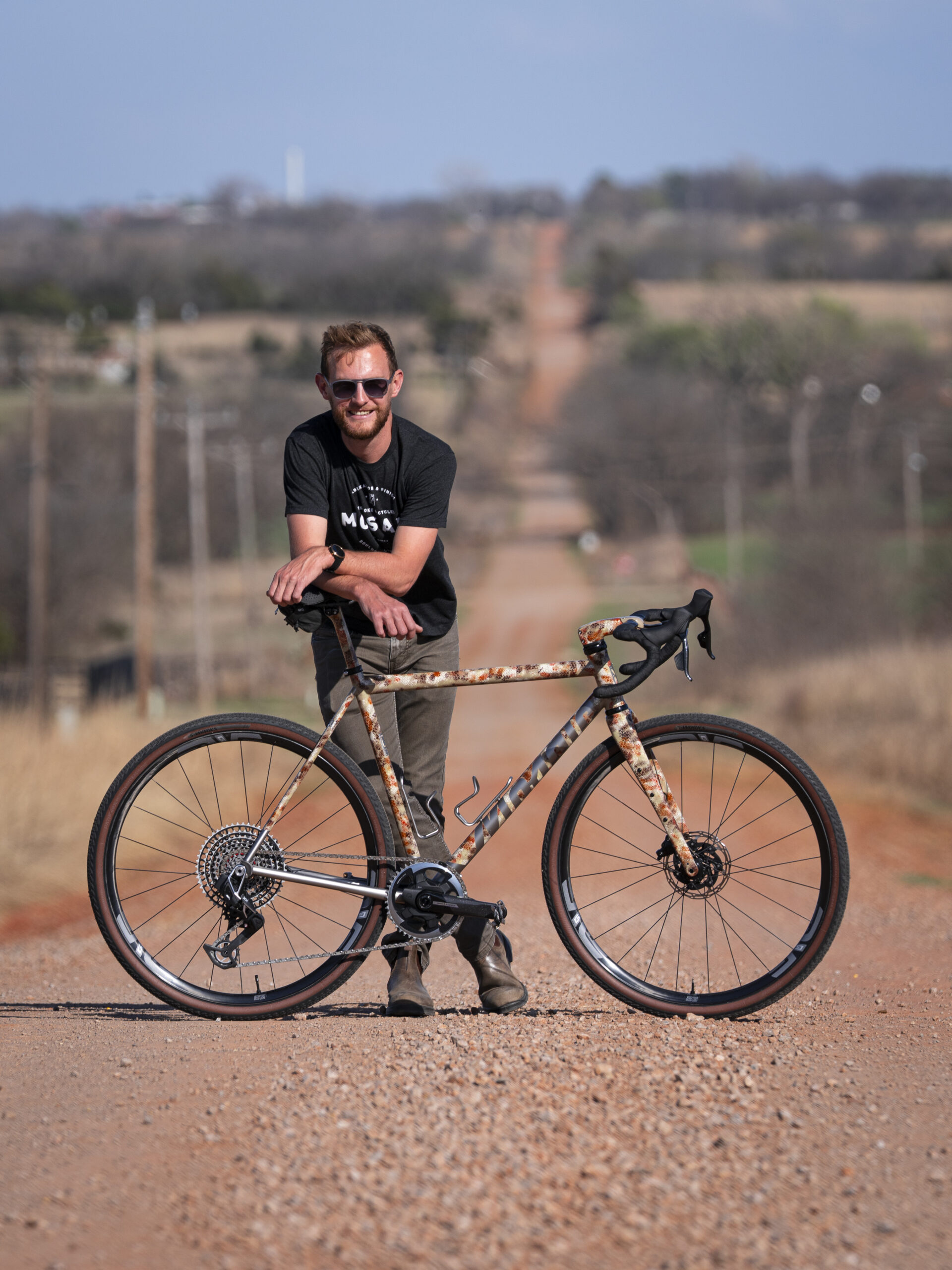
Mosaic CEO and Founder Aaron Barcheck has been known to strap a fly rod to his MT-2 hardtail and explore the rough high-country singletrack in a quest for native Browns, Brookies, and Cutthroats. It’s a great way to reach some otherwise hard-to-reach fishing spots while combining two of our favorite pastimes. So for this year’s MADE Show Bike lineup, we hooked up with Ross Reels for this fishing-themed collaboration.

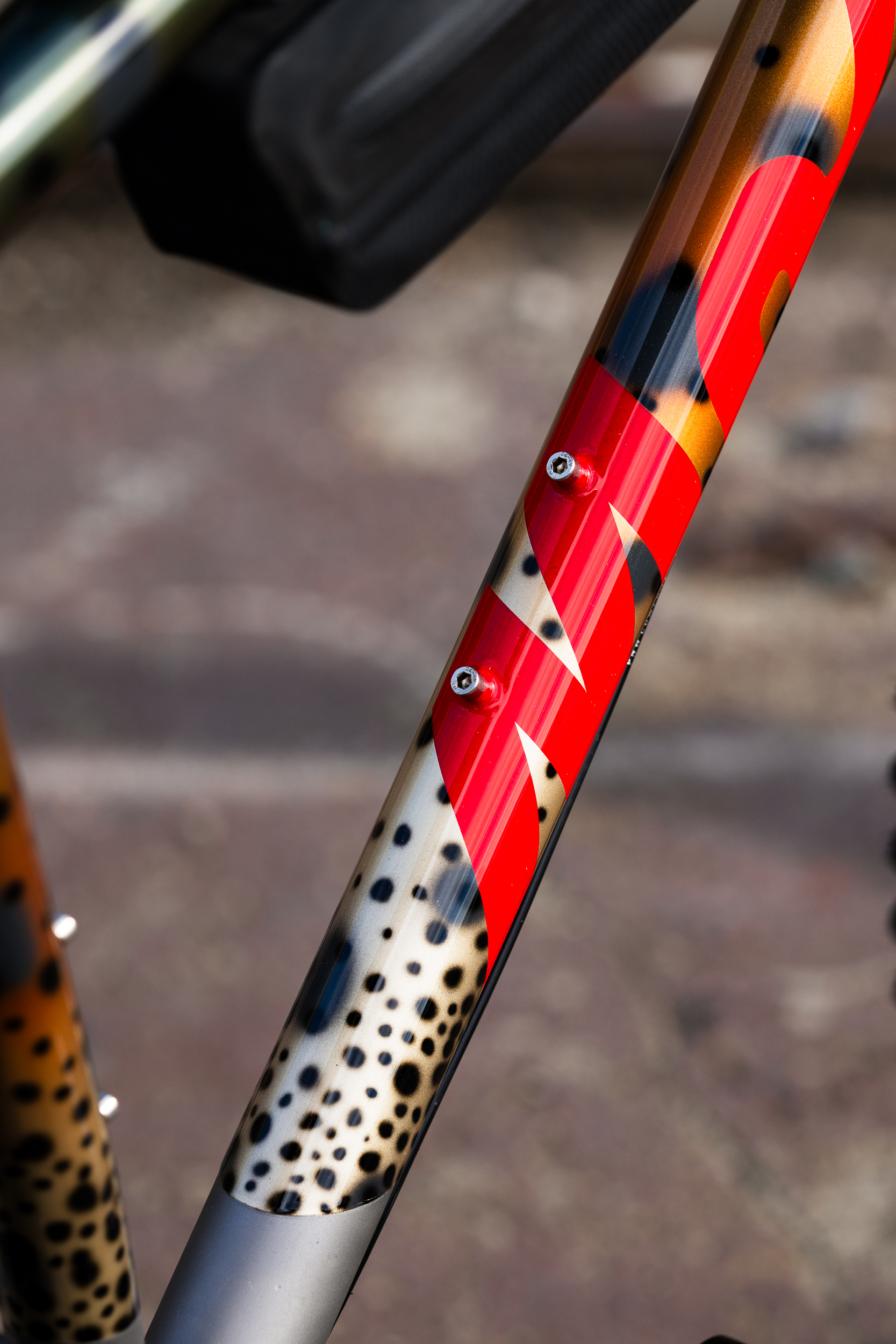
We started with our tried-and-true, batch-built Mosaic MT-2 hardtail frame and Shimano’s new 12s XTR wireless groupset. The finish isn’t available as a standard Factory or Artist Series option. Instead, it’s a custom in-house design inspired by the native Brown Trout, featuring greens, golds, dark spots, and bright red accents. Even the Fox Factory 34 fork is painted to match.

Our show bike is set up for peak fishing adventure with bags from Tailfin and a painted-to-match rod holder we made in-house, but beneath all that gear lurks a high-performance hardtail capable of anything.

Stay tuned for a deeper dive into this collaboration in a future post.

Build

Mosaic MT-2 hardtail with custom Trout finish

Shimano XTR groupset

Hunt Proven Carbon wheels

Tailfin bags

Fox Factory 34 Fork

Continental Hydrotal Tires

PNW V2 Loam Dropper post

PNW V2 Loam Pedals

Wolf Tooth Headset and Seat Clamp

MADE 2025 Show Bike #1: Above Category x Mosaic: RT-1 iTR in Nebula

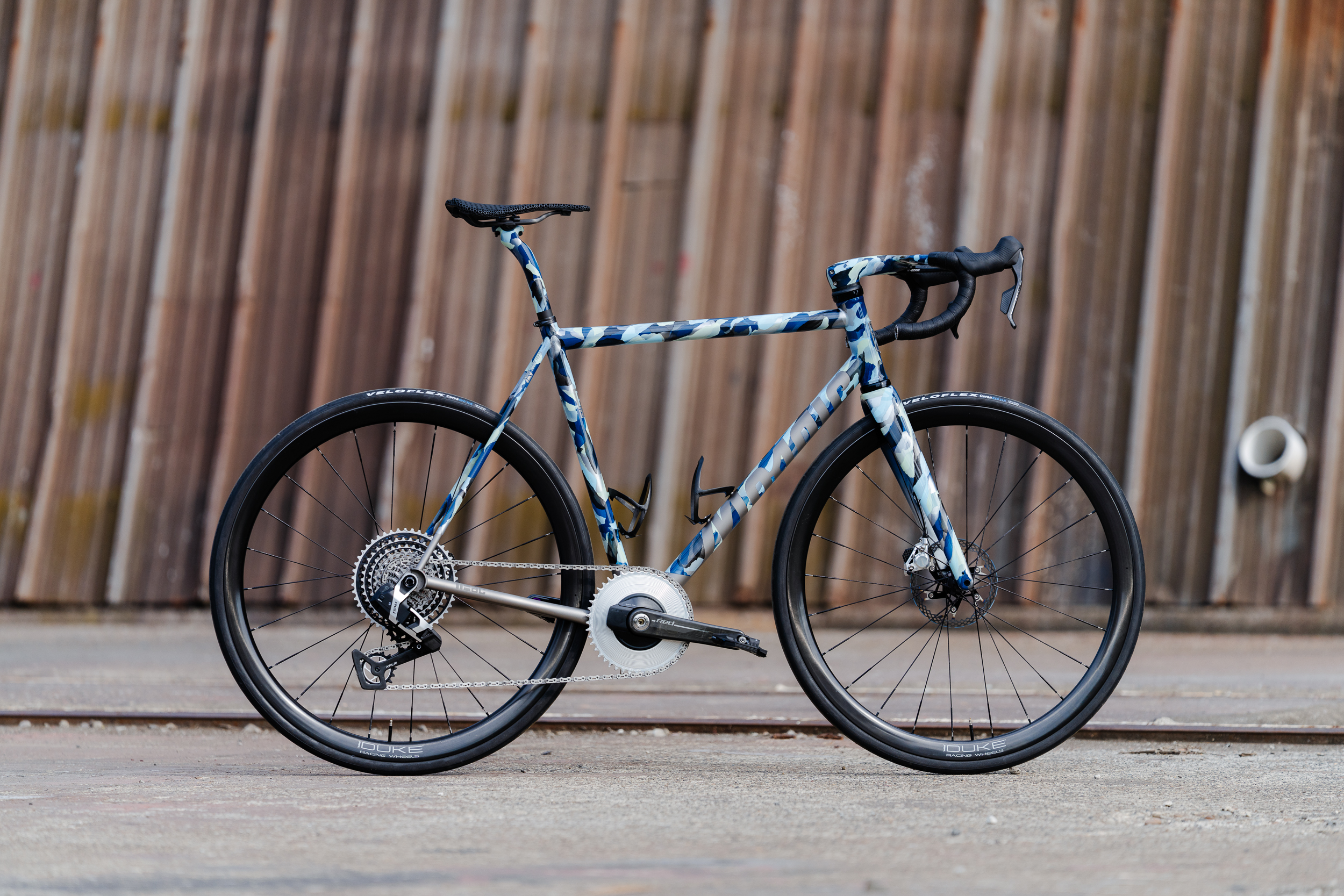
For this year’s MADE Show we worked with Above Category to bust out one of the lightest RT-1 iTRs to date—just 15.3lbs thanks to a medley of exotic parts which, like our Series 1 butted titanium tubeset, shave every possible gram without sacrificing performance or reliability. 

The foundation is a Mosaic RT-1 ITR frameset finished in our Artist Series #7 Nebula. Blocks of color in shades of icy blue, silver and pale white extend to the Björn Glagol seatpost and Enve SES one-piece bar and stem, tying together the bike’s silhouette with shifting, light-catching color. 

From there, Above Category pulled together a top notch build:: SRAM RED XPLR wireless drivetrain, Duke Racing carbon rims laced to Tactic hubs with Berd spokes, and a Björn Setka 3D-printed saddle. Enve SES integrated 

AC never skips the details, rounding out this feathery build with Tune carbon cages, Absolute Black brake pads and Garbaruk aero chainring. 

This is one that has us daydreaming about upgrades for our personal bikes. 

Dealer: Above Category

Build: 

Mosaic RT-1 iTR Made-to-Order Frameset with Nebula Artist Series Finish

SRAM RED XPLR Group

Duke Racing Carbon rims laced to Tactic hubs with Berd spokes

Bjorn Setka  3D printed saddle

Bjorn Glagol seatpost

Enve SES one piece bar and stem

Tune carbon cages

Absolute Black brake pads

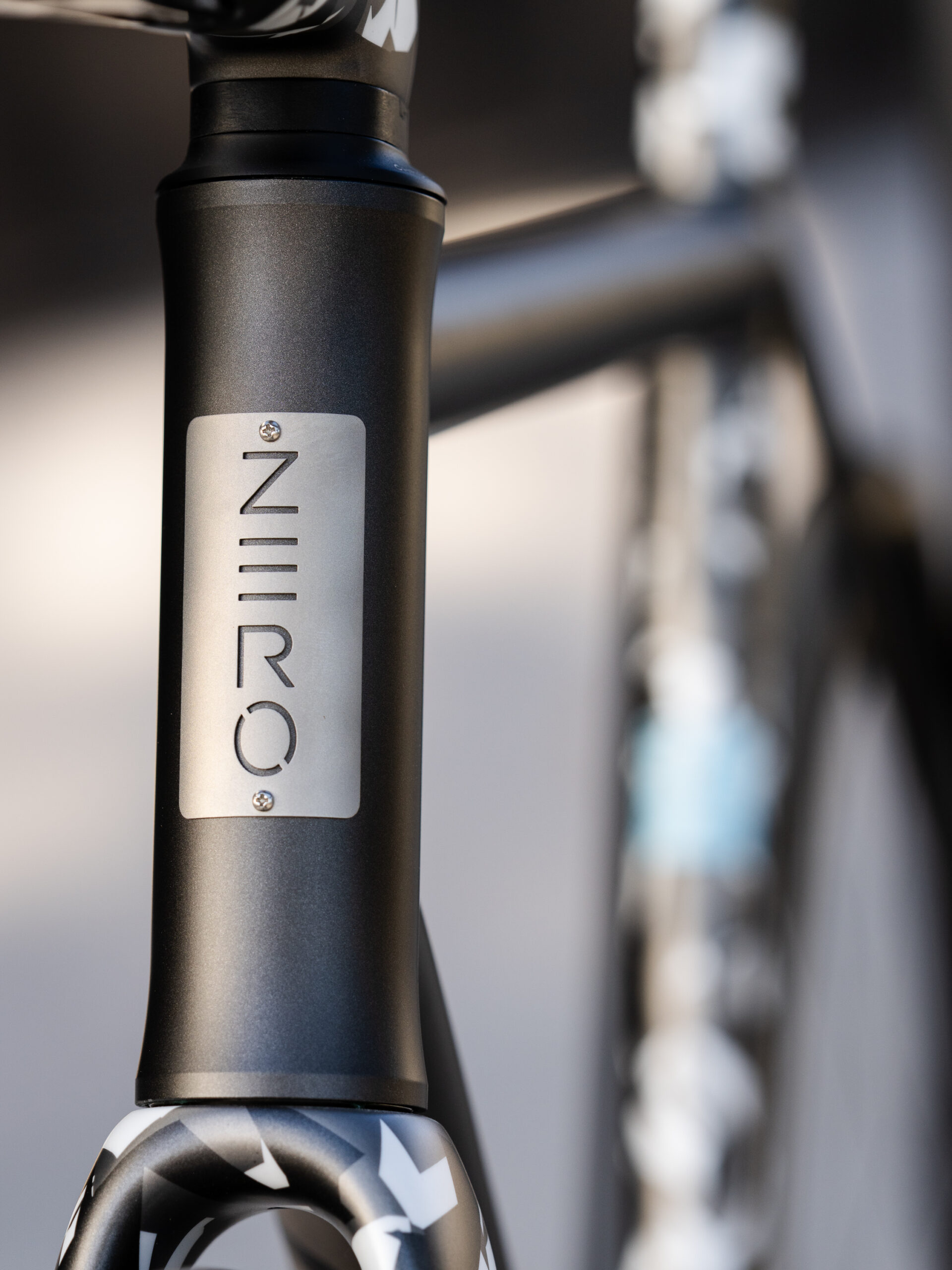
Introducing: The all-new Mosaic RT-Zero

After years of crafting thousands of the most refined high performance titanium bikes on Earth, we’re taking Mosaic to the next level: introducing Mosaic Zero Ops. 

This is where we’ll push the boundaries of what we’re capable of, and what our bikes can do. We’ll test new materials, production methods and tools, and we’ll explore partnerships with other domestic manufacturers to produce key components. 

Zero Ops models will be more technically advanced and refined than our Level 1 models, without compromising performance, durability, or our ability to tune the ride quality for the rider. 

The first model to come out of our Zero Ops Program is the all-new RT-Zero. You’ve probably seen handmade bikes with carbon seat tubes before, but not like this.

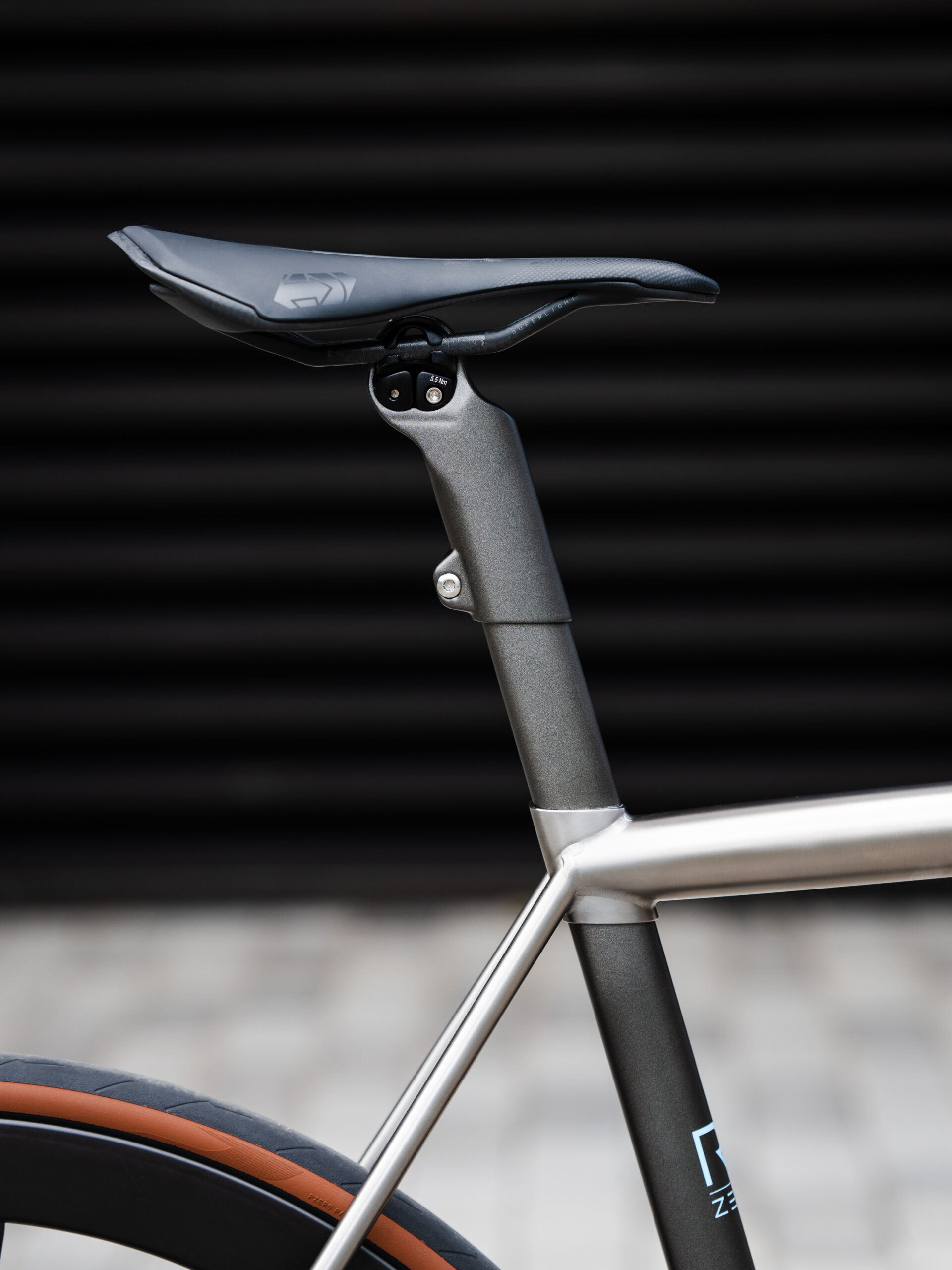
The RT-Zero features Mosaic’s proprietary, in-house–engineered carbon seatmast and topper—both proudly made in the USA—a testament to the quality and durability Mosaic is known for. The D-shaped Zero Ops mast uses a truncated airfoil, or Kamm-tail, profile that not only reduces aerodynamic drag but, more importantly, allows us to fine-tune stiffness and compliance by adjusting the composite layup in ways a traditional round tube simply can’t match.

From there, we saw the opportunity to recalibrate the rest of the RT-Zero’s  custom butted tube mix around the Zero Ops seat tube to give this model a noticeably different look and feel from our standard (and extremely capable) flagship RT-1 ITR, our most popular model road bike. Enhancing that feel and tunability will be a new bridgeless 12mm seatstays, precisely mitered to follow the profile of the CNC’d titanium seat collar, flowing around the outside and into the shaped top tube.

Each RT-Zero will be Made-to-Order and therefore the exact tube selection, including diameter, wall thickness and butting profile will be tailored to the rider and therefore frame weights will vary, but on average this will be the lightest Mosaic model in our lineup. 

On the road, the RT-Zero delivers an even livelier, more responsive feel during hard efforts and out-of-the-saddle climbs. The oversized downtube and Zero Ops carbon seatmast create an exceptionally stiff bottom bracket and near-instantaneous power transfer. Building on that rigid foundation, the carbon seatmast and topper add critical compliance, delivering something many bikes promise but few deliver: a ride that’s simultaneously smooth and sharp. The RT-Zero wants to be pushed on every rise and roller, and on descents it tracks with the precision and poise Mosaic is known for: stable and confidence-inspiring from the first ride.

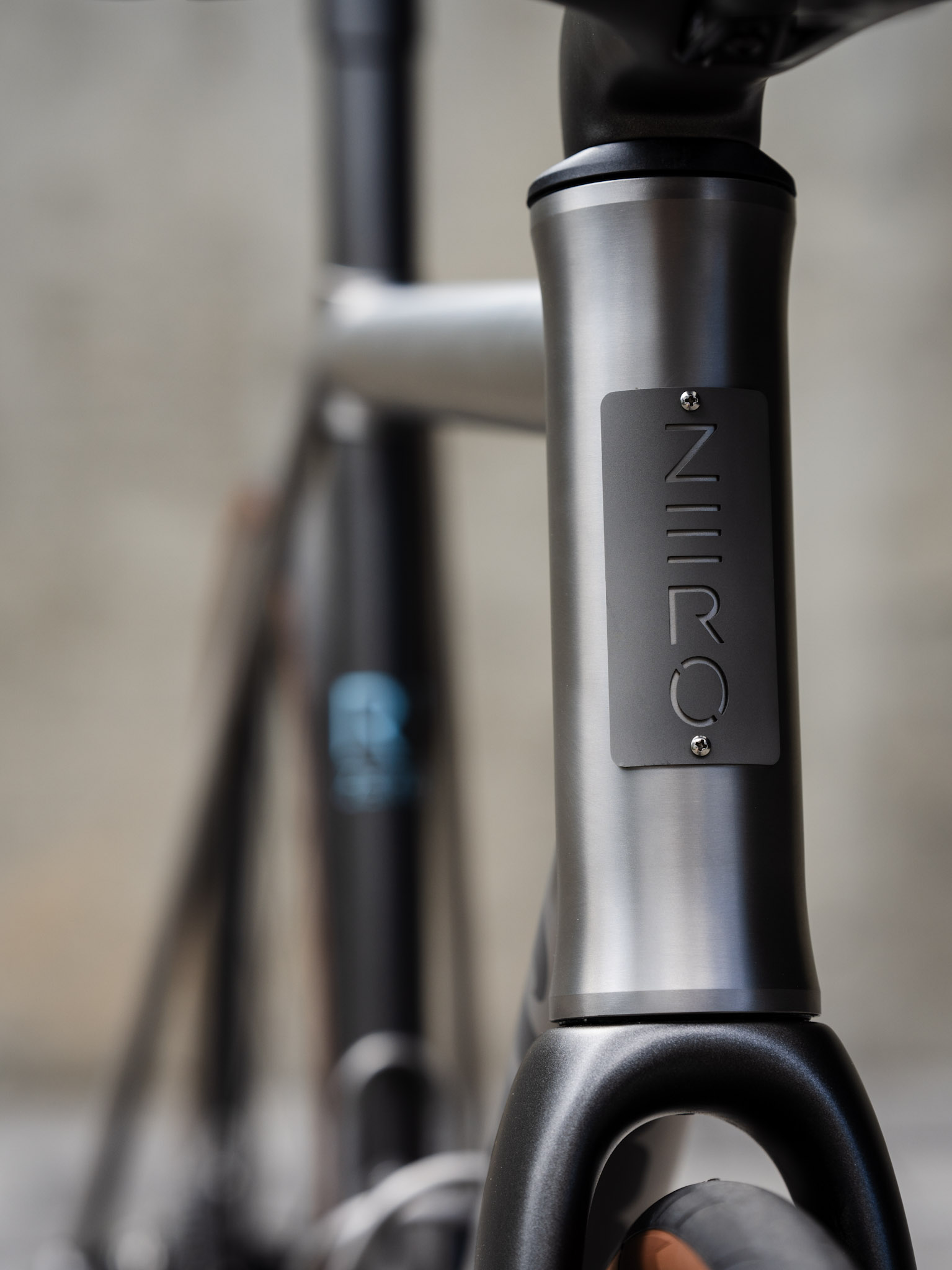
The RT-Zero also introduces a new tapered IS52/52 head tube, flat-mount UDH dropouts, and a T47 bottom bracket shell with full-length internal routing, all designed in-house and CNC-machined from titanium, which is our way to ensure the highest quality materials and the precise fabrication and finish Mosaic is known for. Capping the D-shaped Zero Ops seatmast is a Mosaic-designed, compression-molded carbon seatmast topper fitted with premium ENVE hardware.

The RT-Zero  is the first model by Mosaic Zero Ops, the result of over 15 years of titanium frame fabrication combined with countless hours of in-house dreaming, development and testing of these enhancements in the pursuit of the ultimate Mosaic…so far. 

Will there be more from Mosaic Zero Ops? Will you see some of these features trickle down to the rest of the Mosaic line? Maybe. Time will tell. 

A limited production run of 25 first edition RT-Zero framesets, hand-finished with exclusive Zero Ops paint options will be available to order in 2025. The pre-order window is open from August 21st through October 31st, with RT-Zero deliveries beginning in February of 2026. Contact your Mosaic Dealer to secure an RT-Zero slot today or sign up to the RT-Zero List then we’ll get to work on perfecting your very own RT-Zero.

Mosaic Artist Series: Form, Function, and Fine Art Finishwork

Raw titanium. Exquisite welds. Clean single‑color knockouts and signature fades in every hue imaginable. These are the hallmarks of Mosaic’s finish program, beloved by riders who appreciate understated elegance. But some riders look for more—a frame that feels like a rolling canvas, where bold patterns, complex paint techniques, and pure individualism come together. For them, there’s the Mosaic Artist Series.

Developed entirely in-house, these finishes go beyond traditional paint and polish, transforming our titanium frames into rideable works of art. They shift in light, reveal intricate details up close, and no two are ever alike. Each technique carries its own identity yet shares a unifying theme: limitless range. Whether rendered in striking contrasts or subtle tonal palettes, every Artist Series finish offers the freedom to create something unmistakably personal.

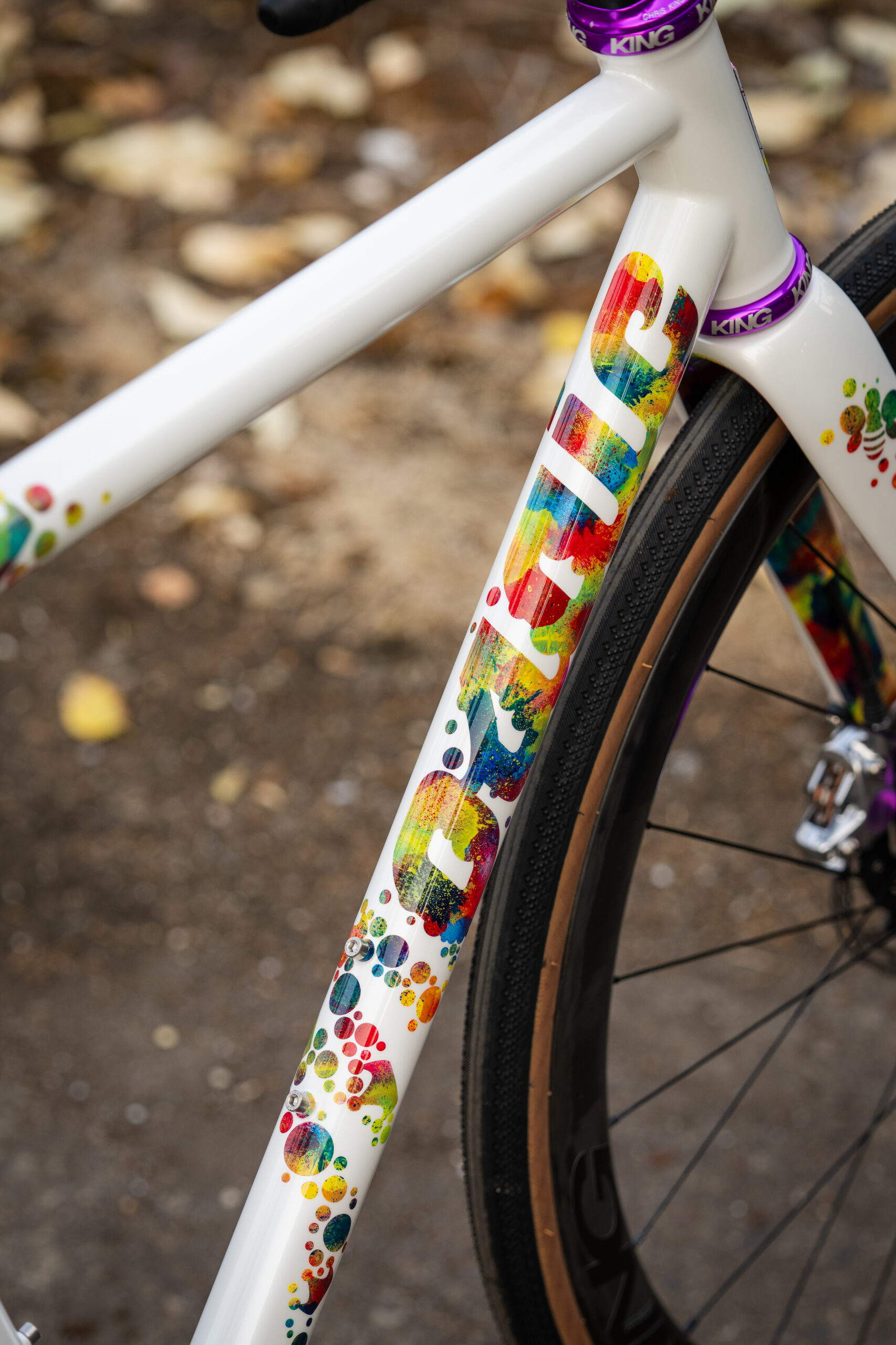
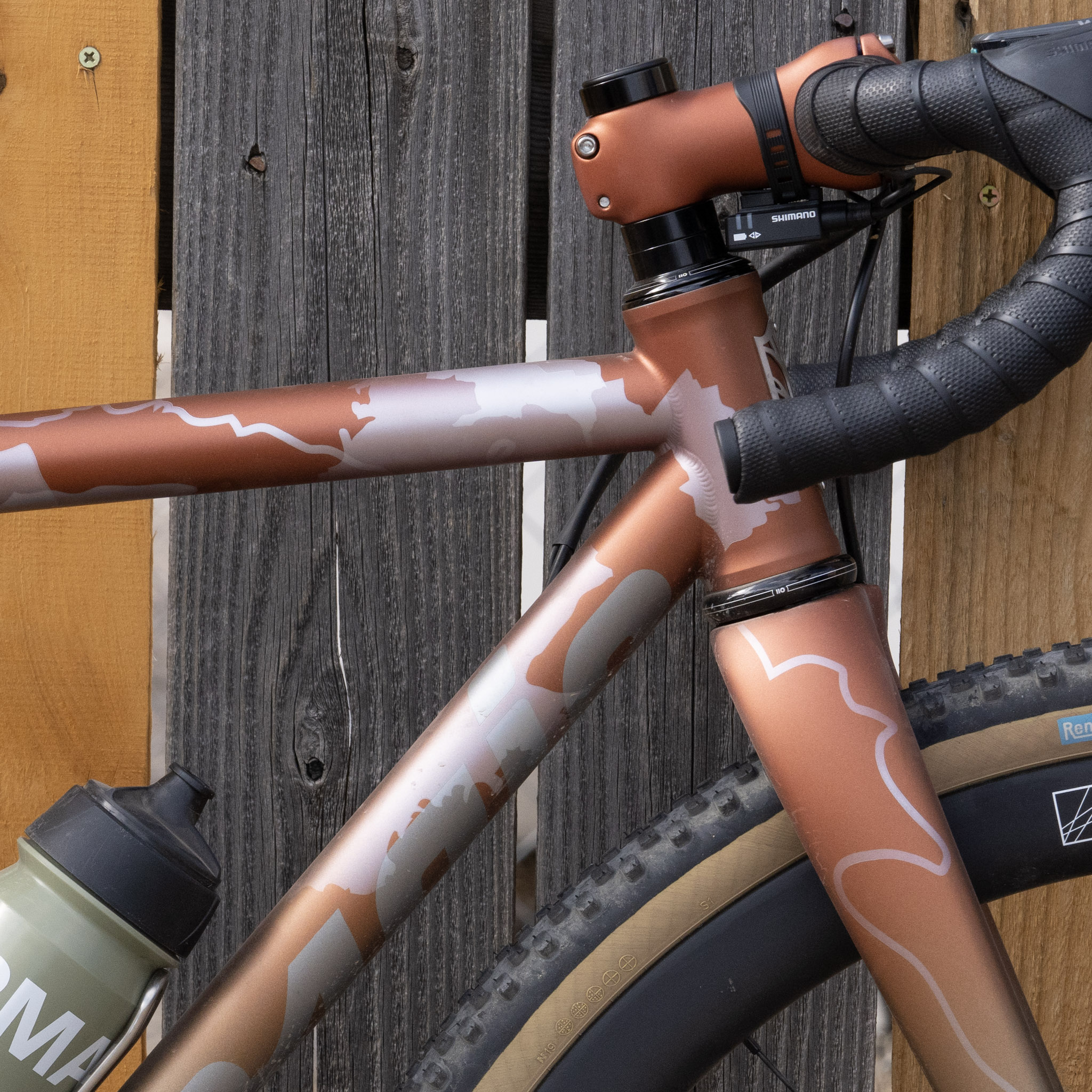
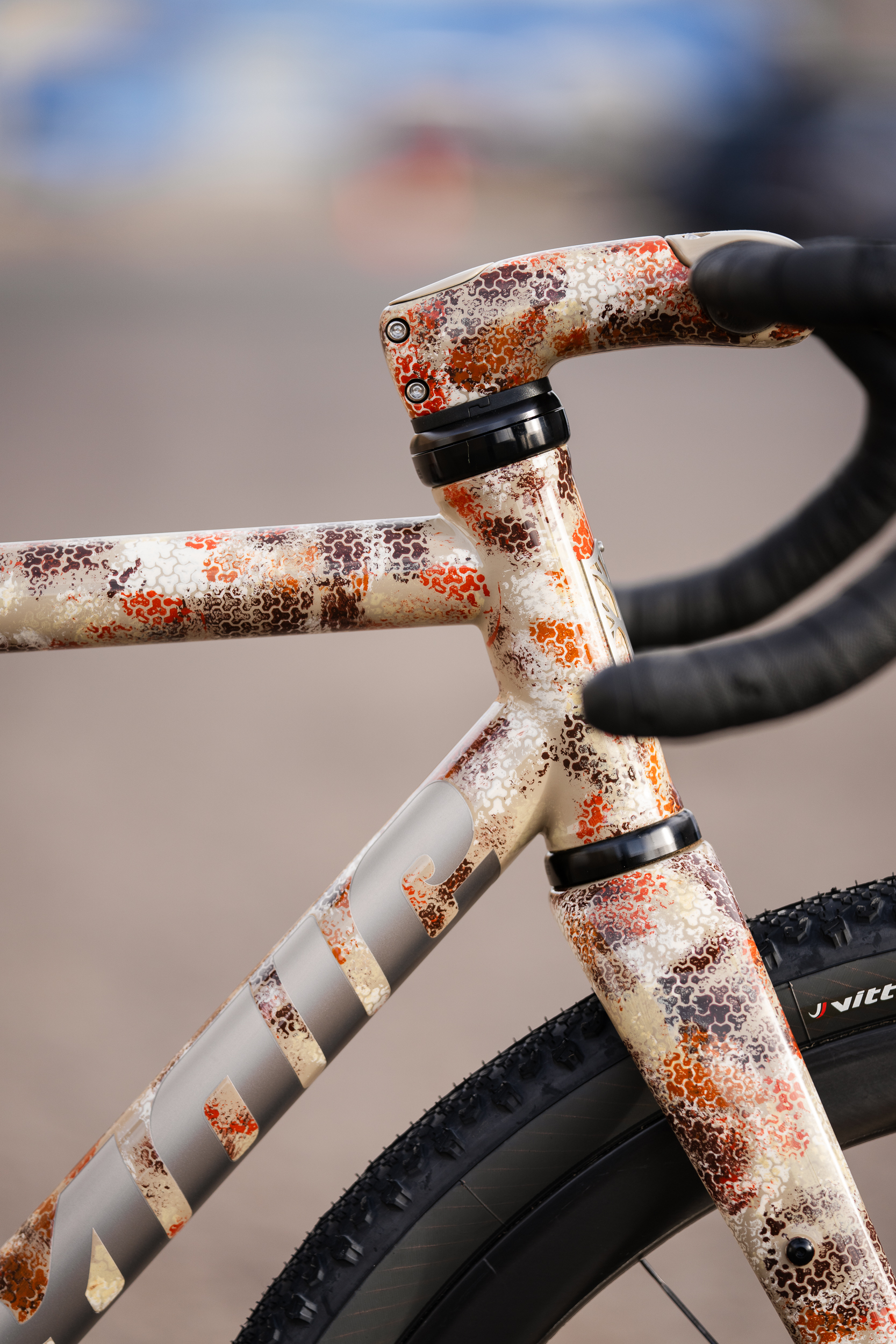
Today, the Artist Series includes five finishes: Prismatica, Atlas, Particulate, Scale and Nebula. Here’s what makes each one distinct:

Prismatica

Prismatica debuted as a one‑off for Chris King’s annual Open House—a challenge to create a finish that honored their newest headset color while remaining unmistakably Mosaic. The result was a riot of color contained within our clean lines: lively and vibrant up close, yet composed from afar.

Inspired by light refracting through crystal, Prismatica plays with saturation and transparency, shifting character depending on angle and light. It remains one of our most distinctive Artist Series finishes.

Atlas

Atlas explores movement through landscapes—an artistic mapping of place and self onto titanium. Developed in collaboration with Colorado artist and athlete Krysten Koehn, Atlas draws on the layered geography of the Rocky Mountains and the experience of navigating them by bike.

Abstract cartographic forms and tonal fades evoke ridgelines, valleys, and shifting alpine light. Striking in bold palettes or quietly immersive in muted tones, Atlas reflects the rider’s journey and the landscapes that shape it.

Particulate

Built on our Two Tone layout, Particulate combines a single base color—or a two‑color fade—with a splatter effect contained within the logos and inner fork blades. The splatter colors are left to the painter’s imagination: you choose the base, and we handle the rest.

Particulate is Mosaic’s take on the classic “splatter paint” look—energetic yet precisely executed. Clean masking lines keep the chaos contained, resulting in a finish that feels bold, refined, and distinctly Mosaic.

Scale

Created by Mosaic founder Aaron Barcheck, Scale reimagines the Knockout layout with a randomized stamped technique that produces rhythmic, layered texture. The effect is cohesive yet never identical—each frame a unique expression of pattern and color.

Available in multiple colorways (or customized with the Mosaic design team), Scale spans a wide spectrum: bold and primal in high‑contrast palettes, subtle and nuanced in tonal blacks and greys. It’s a finish defined by balance—refined artistry with an untamed edge.

Nebula

Nebula evokes the layered beauty of cosmic gas clouds, blending gradients and color fields into a flowing, organic pattern. Its tones appear to shift as the bike moves, revealing new depth from every angle. Whether expressed in vivid color or moody monochrome, Nebula offers an immersive canvas for riders who want a finish that feels alive.

Artistry and Performance Combined

The Artist Series is always evolving, shaped by experimentation, rider inspiration, and the constant pursuit of new techniques. Each frame takes on its own personality—sometimes vivid, sometimes restrained, always unmistakably Mosaic.

Artist Series finishes are available on any new Mosaic build and can also be applied as refinishes for existing Mosaic framesets. Whether you’re drawn to vibrant explosions of color or the quiet elegance of tonal greys, the Artist Series offers a uniquely personal way to make your Mosaic truly your own.